
Research date: September 1, 2026. “Ethereum Layer 2 is just cheaper Ethereum” is one of those explanations that is technically useful for ten seconds and misleading for the next ten years.
A Layer 2 transaction can feel almost identical to an Ethereum transaction. You connect the same wallet, sign with the same private key, pay gas in ETH and interact with familiar applications. But under the surface, the transaction follows a different route.
It may first enter a sequencer operated by one organization. It executes on a separate chain. Its data is compressed into batches. Those batches are posted back to Ethereum, increasingly through temporary data objects called blobs. Withdrawals may depend on a challenge period or validity proof. And the bridge connecting Layer 2 back to Layer 1 becomes part of the security model.
This is why Ethereum Layer 2 should be understood as an architecture, not a discount coupon on gas fees.
The important question is not simply, “How cheap is a swap on Base or Optimism?” It is: Which parts of Ethereum security are inherited, which parts are delegated to the Layer 2 operator, how are fees generated, and what must happen before your money can safely return to Layer 1?
Why Ethereum needs Layer 2 at all
Ethereum’s base layer deliberately prioritizes decentralization, verification and security over maximizing raw transaction throughput. Every full participant should be able to independently validate the chain without requiring data-center-scale hardware.
That design creates scarcity. Blockspace is limited. When demand rises, users compete for inclusion by paying higher gas fees.
A Layer 2 changes the equation by moving much of the computation away from Ethereum while using Ethereum for settlement and data availability.
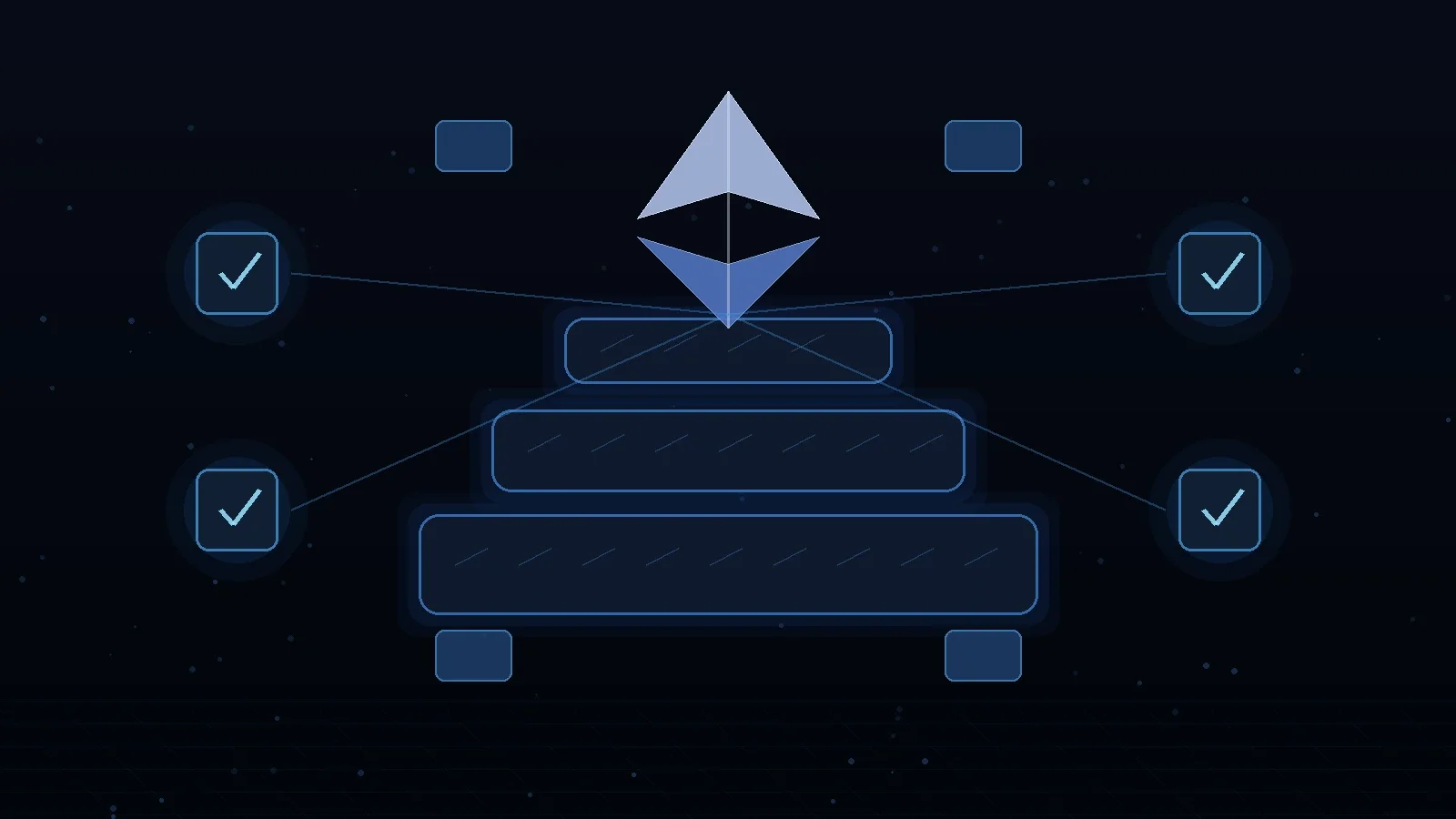
Instead of asking Ethereum to execute every individual swap, transfer or game action, a rollup can execute thousands of transactions elsewhere, compress the result and publish the necessary data or commitments back to Layer 1.
Ethereum.org describes optimistic rollups as protocols that improve throughput by processing transactions offchain while publishing transaction results to Mainnet and deriving security from Ethereum rather than operating as independent sidechains.
The word “rollup” is literal
Imagine 5,000 users each send a separate transaction.
On Ethereum Layer 1, those 5,000 transactions compete directly for Ethereum execution blockspace.
On a rollup, the Layer 2 executes them in its own environment. The system then bundles—or rolls up—the relevant transaction data into a compressed batch that is posted to Ethereum.
The fixed cost of interacting with Ethereum is therefore spread across many users.
This is the economic heart of Layer 2 scaling.
If posting a batch to Ethereum costs $2,000 and the batch contains 10,000 transactions, the average data cost is about $0.20 per transaction before considering compression, execution fees and operator economics.
If only 500 transactions share the same $2,000 cost, average cost rises to $4.
Layer 2 economics therefore benefit from scale.
A Layer 2 transaction has multiple cost layers
When a wallet displays a fee of a few cents, that number is the end result of several economic components.
Current OP Stack documentation describes total fees as a combination of L2 execution fees, L1 data fees and—on chains that enable it—an operator fee.
The simplified equation is:
Total user fee = L2 execution cost + L1 data cost + operator-specific fees.
The execution component pays for computation on the Layer 2. The L1 data component reimburses the cost of publishing data to Ethereum. Operator fees can create additional economics for the chain operator.
This is why comparing Layer 2 fees by looking only at an Ethereum-style gas price can be misleading. A low L2 gas price does not eliminate L1 data costs.
Blobs changed the economics of rollups
Before Ethereum’s Dencun upgrade, rollups often posted transaction data through calldata, competing more directly with ordinary Ethereum execution for expensive permanent blockspace.
EIP-4844 introduced blobs: large temporary data objects designed primarily for rollup data availability.
Ethereum.org explains that blobs are priced separately from normal execution gas and can be pruned after roughly 4096 epochs, about 18 days. They do not need to remain permanently available to every Ethereum client because their main job is to make rollup transaction data available long enough for verification or challenges.
This was an important conceptual shift.
Ethereum effectively created a specialized market for temporary rollup data.
That allows Layer 2 systems to buy the type of blockspace they actually need rather than overpaying for permanent execution storage.
Why blobs are temporary without making rollups temporary
This can sound alarming the first time you hear it.
If blob data disappears after a few weeks, does the Layer 2 history disappear too?
No. The point is that Ethereum consensus needs the data available during the relevant period in which state transitions can be reconstructed or challenged. Layer 2 operators, archival services and other infrastructure can maintain longer-term histories separately.
The security requirement is not that every Ethereum node permanently stores every compressed Layer 2 transaction forever.
The requirement is that enough data is available when the protocol needs to verify the correctness of the Layer 2 state.
The sequencer is the part most users never think about
On Ethereum, block production is distributed across validators under Ethereum’s consensus rules.
On many Layer 2 networks today, transaction ordering is much more centralized.
The OP Stack documentation describes the sequencer as a privileged node that accepts user transactions and constructs Layer 2 blocks. Base’s terms state that the Coinbase Sequencer receives, records and reports transactions on Base and is initially the only sequencer node supporting ordinary transaction flow, while noting other mechanisms for submission through Ethereum.
This creates an important distinction between custody and ordering power.
A sequencer generally does not possess your private keys. It cannot simply sign a transaction moving your wallet’s assets wherever it wants.
But it can have meaningful influence over transaction inclusion, ordering and timing.
That creates risks around downtime, censorship, MEV and user experience.
Centralized sequencing does not mean centralized custody
This nuance matters because crypto discussions tend to collapse all centralization into one category.
If Coinbase runs a Base sequencer, that is not the same as Coinbase holding every user’s assets in a custodial exchange account.
Users still control private keys.
But the network’s normal transaction path can depend on infrastructure operated by a centralized party.
A better risk framework asks separately:
- Who controls transaction ordering?
- Who can censor or delay inclusion?
- Can users force transactions through Layer 1?
- Who controls upgrades?
- Who controls the bridge contracts?
- What happens if the sequencer goes offline?
Optimistic rollups assume validity first and challenge fraud later
The phrase “optimistic rollup” does not mean developers are emotionally optimistic.
It means the protocol initially accepts a state commitment without requiring a cryptographic validity proof for every batch.
There is then a challenge period during which incorrect claims can be disputed through fault proofs.
Optimism’s protocol documentation describes a challenge window of seven days for mainnet withdrawals. After that period ends without a successful challenge, the commitment can be treated as final for withdrawal purposes.
This creates the famous optimistic-rollup withdrawal delay when users move assets through the canonical bridge back to Ethereum.
Why a seven-day withdrawal can coexist with instant trading
Users sometimes confuse Layer 2 transaction finality with bridge withdrawal finality.
You can trade, lend or transfer assets within an optimistic Layer 2 quickly because the Layer 2 state advances continuously.
But when you ask Ethereum Layer 1 to release assets based on a Layer 2 claim, Ethereum needs confidence that the state commitment was not fraudulent.
The challenge window exists to create that confidence.
Third-party bridges can offer faster exits by fronting liquidity, but then you have added another counterparty or smart-contract layer.
ZK rollups use a different proof model
Zero-knowledge rollups generally prove that state transitions are valid using cryptographic validity proofs rather than assuming validity and waiting for a fraud challenge.
The trade-offs are different.
ZK systems can achieve strong finality properties without the same week-long fraud-proof challenge window, but proving systems are computationally complex and implementations vary widely.
The important investor lesson is not “ZK always better” or “optimistic always cheaper.”
It is that the two architectures pay for security differently.
Optimistic systems rely on challenge mechanisms. ZK systems spend resources generating proofs.
A bridge is not just a transfer button
When you move ETH from Ethereum to a Layer 2, you are not teleporting the same coin between two databases.
Canonical bridge contracts generally lock or account for assets on one domain and make corresponding assets available on the other.
The bridge therefore becomes one of the most sensitive pieces of infrastructure in the system.
A vulnerability in a bridge or upgrade mechanism can threaten assets even if Ethereum itself is functioning perfectly.
This is why the phrase “secured by Ethereum” should never be interpreted as “every component is as decentralized and battle-tested as Ethereum.”
Cheap transactions can create expensive bridge mistakes
Imagine you save $8 in gas by using a Layer 2 for a swap.
You then move $50,000 through an unofficial bridge offering a slightly faster route and unknowingly accept a materially different smart-contract risk.
The $8 transaction saving is irrelevant compared with the new risk exposure.
Layer 2 users should therefore separate transaction efficiency from asset-transfer security.
Why OP Stack fees are also a business model
Optimism’s current documentation shows that OP Stack chains route fee components into dedicated fee vaults. Unlike Ethereum Layer 1, where EIP-1559 base fees are burned, OP Stack base fees can be collected into a BaseFeeVault.
Priority fees, L1 data fees and operator fees can also flow into dedicated vaults.
This matters because Layer 2 networks are not merely public-good scaling systems. They can be businesses.
The operator charges users, pays Ethereum for data availability and infrastructure, and can retain a spread.
A simple economic model looks like this:
Layer 2 gross margin = user fees − Ethereum data costs − operating costs − incentives.
If blob costs fall while user activity rises, operator economics can improve dramatically.
Why Base, Optimism and Arbitrum can all be “Ethereum” without being identical
These networks share Ethereum as an important settlement and data-availability layer, but they differ in software stacks, governance, sequencers, upgrade controls, fee policies, bridges and ecosystems.
Base is built on the OP Stack but has its own chain operator and fee configuration. Optimism operates within a broader Superchain vision. Arbitrum uses its Nitro architecture and its own governance and proof systems.
So “I use Ethereum Layer 2” is similar to saying “I use a bank.” It describes a category, not the specific risk profile.
Layer 2 also changes how we think about ETH value capture
This is one of the most important economic debates in Ethereum.
If users migrate from Layer 1 to cheap rollups, Ethereum may collect less execution fee per user interaction.
But rollups still consume Ethereum data availability and settlement, and large Layer 2 ecosystems can increase the total number of Ethereum-secured transactions by orders of magnitude.
The question becomes whether enormous transaction volume multiplied by small per-transaction settlement fees creates more value than a smaller number of expensive Layer 1 transactions.
This is not unlike cloud computing. Lower unit cost can reduce revenue per transaction while expanding total demand.
Our Ethereum staking guide explains the validator side of ETH economics. Layer 2 adds another layer: how much economic activity ultimately pays Ethereum validators and burns ETH versus being retained by Layer 2 operators.
Layer 2 can fragment liquidity
Scaling creates a new inconvenience.
Instead of one Ethereum environment containing all users and liquidity, capital can spread across Base, Arbitrum, Optimism and many other rollups.
A token may have deep liquidity on one chain and shallow liquidity on another. Applications may deploy separate pools. Bridges become necessary to move assets between ecosystems.
Cheap transactions can therefore create expensive fragmentation.
This is where user experience becomes strategic. Wallets, intents and cross-chain routing systems increasingly try to hide the complexity so users think in assets rather than chains.
Layer 2 tokenomics can be completely separate from Layer 2 usage
A chain can grow rapidly without its governance token necessarily capturing proportional value.
This is exactly the problem discussed in our altcoin tokenomics guide.
If a Layer 2 token grants governance rights but transaction fees are paid in ETH and operator economics accrue elsewhere, usage growth does not automatically equal tokenholder revenue.
Investors should therefore separate three questions:
- Is the Layer 2 technologically successful?
- Does the Layer 2 operator generate attractive economics?
- Does the token capture any of that economic value?
Those can have three different answers.
Stablecoins make Layer 2 economically useful
Layer 2 networks are not only speculation venues. Stablecoin transfers, payments, remittances and settlement are among the most practical use cases for cheap blockspace.
Our stablecoin guide explains the reserve and redemption risk behind USDT and USDC. Layer 2 adds a second risk layer: which chain or bridge representation of that stablecoin are you actually holding?
A token that says “USDC” in a wallet interface may be natively issued or bridged from another network. Those are not necessarily equivalent claims.
Bitcoin and Layer 2 solve different scaling problems
Bitcoin’s primary investment thesis centers on scarcity, settlement and monetary neutrality. Ethereum’s Layer 2 strategy is much more explicitly about scaling programmable execution.
Our Bitcoin valuation guide uses holder cost basis and realized capitalization. Those metrics are not the right framework for assessing a rollup.
For a Layer 2, more relevant variables include transaction volume, fees, active addresses, data posted to Ethereum, sequencer economics, bridge security and token value capture.
A practical Layer 2 checklist
- Which rollup architecture is used: optimistic, ZK or something else?
- Where is transaction data published?
- Does the chain use Ethereum blobs?
- Who operates the sequencer?
- Is there a forced-inclusion mechanism if the sequencer fails?
- Who can upgrade the contracts?
- How long is the canonical withdrawal period?
- What proof system secures withdrawals?
- Which bridge are you using?
- Is the stablecoin native or bridged?
- What portion of user fees is paid to Ethereum?
- What portion is retained by the operator?
- Are operator fees configurable?
- Does the governance token capture fee economics?
- How concentrated is liquidity?
The most common Layer 2 mistakes
- Assuming every Layer 2 inherits every property of Ethereum.
- Equating sequencer centralization with custodial control—or ignoring sequencer power entirely.
- Using unofficial bridges because they are faster without evaluating contract risk.
- Comparing gas prices while ignoring L1 data fees.
- Assuming cheap transactions mean the chain has no business model.
- Buying a Layer 2 token because the chain has users without checking value capture.
- Ignoring withdrawal challenge periods.
- Ignoring upgrade-key and governance risk.
- Treating bridged and native assets as identical.
- Assuming Layer 2 fragmentation will solve itself automatically.
A worked example: the $10 Ethereum swap versus the $0.10 Layer 2 swap
Suppose the same decentralized exchange trade costs $10 on Ethereum Layer 1 and $0.10 on a Layer 2.
It is tempting to conclude that the Layer 2 is 100 times more efficient.
For the user transaction, that may be directionally true.
But now trace the full system.
The Layer 2 executes the trade cheaply, batches the transaction data with thousands of others, pays Ethereum for blob space, retains some fees for operation and later relies on a proof or challenge process for withdrawals.
The cost reduction comes from shared infrastructure and different security timing—not from eliminating security costs entirely.
This is why the right comparison is not “Ethereum expensive, Layer 2 free.”
It is “Ethereum sells expensive premium blockspace; Layer 2 buys that security wholesale and resells execution retail.”
Why the Layer 2 roadmap matters to investors even if they never use DeFi
Ethereum’s valuation increasingly depends on whether the rollup-centric roadmap creates a larger economic system around ETH.
If Layer 2 networks onboard hundreds of millions of users while continuing to settle data and value on Ethereum, Layer 1 could become a high-value settlement backbone.
If Layer 2 networks progressively move data availability, sequencing and settlement away from Ethereum, the value-capture argument becomes weaker.
The technical architecture therefore maps directly into the investment thesis.
That is unusual. In most technology companies, investors can ignore packet routing. In crypto, protocol architecture can determine who earns the fee.
Final view
Ethereum Layer 2 is not a single network, a single security model or a single investment.
It is a family of systems that compress execution, buy Ethereum data availability and settlement, operate their own sequencing infrastructure and make different trade-offs around proofs, governance and bridges.
The cheapest transaction is not automatically the safest. The most active chain does not automatically have the best token. The most decentralized settlement layer does not automatically make every bridge or sequencer decentralized.
But the architecture is powerful.
Rollups allow Ethereum to specialize. Layer 1 can remain relatively scarce and expensive while Layer 2 networks compete to make execution cheap, fast and application-friendly.
Blobs made that model materially more efficient. Sequencers make it operationally fast. Proof systems make withdrawal security possible. Bridges connect the domains. Fee vaults reveal the business model.
Once you see those pieces separately, “Layer 2” stops being a marketing label.
It becomes a stack you can analyze.
Sources
- Ethereum.org — Optimistic rollups
- Ethereum.org — EIP-4844 blobs and data availability
- Optimism — OP Stack transaction fees
- Optimism — Protocol overview and fault proofs
- Base — Network fees
- Base — Sequencer disclosure
Educational content only. Layer 2 software, fee models, proof systems, sequencer arrangements and bridge contracts can change over time.
Related company analysis: Layer-2 economics matter directly for Coinbase because Base is part of the company’s attempt to own infrastructure below the exchange interface. See our latest Coinbase stock analysis for the investment implications.