
Cisco just reported $17.3 billion of quarterly revenue, $9.3 billion of full-year AI infrastructure orders and a fiscal 2027 outlook far above Wall Street's previous expectations. Yet the shares fell after hours. I think the contradiction tells us something important: Cisco has finally found a new growth engine, but investors have already started charging the company for success.
Year-on-year growth: +18%
Q4 AI infrastructure orders: $4.0bn
FY26 AI infrastructure orders: $9.3bn
FY27 revenue guidance: $72.2–73.4bn
FY27 AI infrastructure revenue target: ~$7.5bn
For most of the last two decades, Cisco was one of those companies investors respected but rarely loved.
It generated enormous amounts of cash. It bought back stock. It paid a dividend. It sold networking equipment that quietly kept the internet functioning.
But it was not where investors went looking for excitement.
Artificial intelligence may be changing that.
Last night Cisco reported fiscal fourth-quarter revenue of approximately $17.3 billion, up almost 18% year over year and ahead of Wall Street expectations. Adjusted earnings per share reached $1.22.
More interestingly, the company recorded roughly $4 billion of AI infrastructure orders from hyperscale customers during the quarter, taking fiscal-year AI orders to approximately $9.3 billion.
For fiscal 2027 Cisco expects revenue between $72.2 billion and $73.4 billion. Wall Street had been expecting less than $69 billion.
That is not a small guidance beat.
It suggests something has changed inside a company whose growth rate was once measured in low single digits.
AI does not only need GPUs
The first phase of the AI trade was easy to understand.
Buy Nvidia.
Then investors discovered memory, cooling, data centers and power infrastructure.
Networking is the next layer.
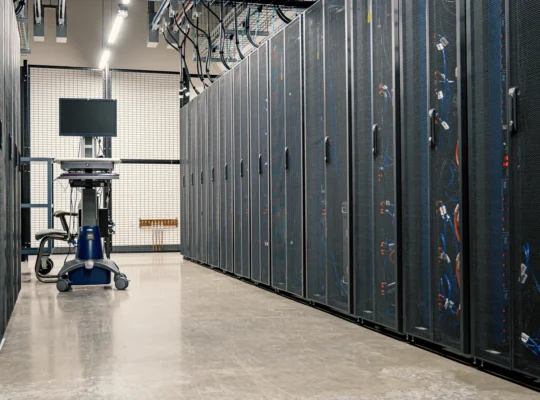
A cluster containing tens of thousands of accelerators is useful only if those chips can communicate with one another at enormous speed. Training a frontier model involves distributing workloads across vast numbers of processors.
The network is therefore not merely connecting computers to the internet. It becomes part of the computing architecture itself.
This is the opportunity Cisco has been waiting for.
$9.3 billion of orders changes the conversation
Cisco booked approximately $9.3 billion of AI infrastructure orders during fiscal 2026, including around $4 billion in the fourth quarter alone.
Management expects roughly $7.5 billion of AI infrastructure revenue in fiscal 2027.
That distinction between orders and revenue matters. Orders tell me customers are committing capital. Revenue tells me Cisco has delivered the equipment.
The gap creates future visibility.
Hyperscalers are building AI clusters at extraordinary scale. They need switches, optics, routing equipment and software capable of connecting increasingly large accelerator fleets.
Cisco does not need to beat Nvidia.
It needs Nvidia's customers to keep building.
The networking supercycle may be broader than AI
One of the mistakes investors can make is assuming all current networking demand is simply an Nvidia derivative.
AI is clearly important, but enterprises are also refreshing aging infrastructure, increasing security spending and modernizing data centers.
Cisco's networking product orders have accelerated sharply during 2026. Data-center switching has been particularly strong.
That matters because the installed base is enormous.
Cisco equipment sits inside companies, governments, universities and telecom networks around the world. An installed base becomes economically powerful when a replacement cycle begins.
A customer does not casually replace an enterprise network. The switching costs include configuration, security policies, employee expertise, downtime and integration.
This creates a moat that is less glamorous than a software network effect but very real.
Splunk changed Cisco more than the market initially appreciated
The $28 billion acquisition of Splunk was controversial when announced.
I understood the skepticism.
Large technology acquisitions often destroy value. The buyer pays a premium, promises synergies and spends years explaining why integration takes longer than expected.
But strategically, Splunk addresses one of Cisco's oldest weaknesses.
Hardware revenue is cyclical.
Software and recurring security revenue are not.
Splunk gives Cisco a major position in observability, machine data and security analytics. Combined with Cisco's networking telemetry, that creates an interesting data advantage.
Cisco can potentially see what is happening inside the network and help customers understand why it is happening.
In an AI-driven infrastructure environment, that becomes increasingly valuable.
Security may ultimately be more valuable than switches
The larger and more complex digital infrastructure becomes, the larger its attack surface becomes.
AI workloads create new security requirements. Companies are moving sensitive data between clouds, models, employees and automated agents.
Cisco wants to secure that traffic at the network level.
This is strategically logical because Cisco already sits in the path of enormous amounts of enterprise data.
If the company can attach security subscriptions to its networking footprint, the lifetime economics of each customer improve significantly.
The long-term bull case therefore is not simply that Cisco sells more switches.
It is that Cisco turns networking hardware into the distribution layer for security and observability software.
Why gross margin matters more now
There was one number in last night's outlook that explains part of the negative after-hours reaction.
Cisco guided Q1 adjusted gross margin to approximately 65%–66%, slightly below consensus expectations around 66.1%.
That sounds trivial.
It is not.
The AI infrastructure boom is more hardware intensive than Cisco's higher-margin software businesses.
If AI makes revenue grow faster but structurally lowers gross margins, investors must decide how much multiple expansion that growth deserves.
This is a classic quality-of-growth question.
I would rather own a company growing 15% with stable margins than one growing 20% while economics deteriorate rapidly.
For now, Cisco's adjusted operating margin remains extremely healthy, around the mid-30% range.
The hidden AI bottleneck: optics
GPUs receive most of the attention. But as AI clusters become larger, moving information between processors becomes increasingly difficult.
That creates demand for high-speed optical connections.
At some point electrical connections become inefficient over distance and bandwidth requirements. Optical networking therefore becomes increasingly important inside and between AI data centers.
This is one reason networking companies may capture a larger share of AI infrastructure spending than investors originally assumed.
The architecture of AI clusters is becoming a system-level engineering problem.
Compute, memory, networking, optics, cooling and power must all scale together.
A shortage in any one layer constrains the entire cluster.
Cisco's unusual advantage: neutrality
Hyperscalers increasingly develop their own chips.
Google has TPUs. Amazon has Trainium. Microsoft and Meta are investing in custom silicon.
This creates an interesting strategic opportunity for Cisco.
The company does not need to choose which accelerator architecture wins.
It can sell networking infrastructure connecting multiple architectures.
In a world where Nvidia, AMD and custom accelerators coexist, an independent networking layer can become more valuable.
This reminds me of the old “picks and shovels” analogy, but with an important twist.
Cisco is not selling the shovel.
It is building the road connecting the mines.
Why the stock fell despite excellent results
Cisco shares initially rose after the report and then fell more than 4% in extended trading.
The obvious question is: why?
The answer is expectations.
The stock had already risen more than 60% during 2026 before the earnings release as investors embraced the AI networking thesis.
When a stock rerates that aggressively, good results stop being sufficient.
The company must surprise investors who are already expecting surprises.
Last night's results validated the AI thesis. They did not necessarily expand it enough to justify another immediate rerating.
Valuation has become the uncomfortable part
Cisco spent much of its post-dot-com history trading like a mature technology utility.
That era appears to be ending.
The market now values the company partly as an AI infrastructure beneficiary.
That is reasonable if earnings growth accelerates sustainably.
It becomes dangerous if today's AI order boom is simply a temporary hyperscaler capex cycle.
At the current valuation, I would not assume significant multiple expansion. I would want future returns to come primarily from earnings growth, free cash flow and dividends.
This is a healthier way to underwrite the investment.
The balance sheet and cash generation still matter
One reason Cisco can take strategic risks is its cash generation.
Unlike many AI infrastructure companies, Cisco does not need to finance its growth through enormous external borrowing.
It generates cash from an installed enterprise base built over decades.
That allows the company to invest, acquire businesses, pay dividends and repurchase shares while participating in the AI buildout.
This is an underrated advantage in a capital cycle where younger infrastructure companies may spend tens of billions before producing meaningful free cash flow.
Cisco versus CoreWeave tells us something important
Yesterday I looked at CoreWeave, where AI demand is extraordinary but so are capex and financing costs.
Cisco sits one layer away from that problem.
CoreWeave must finance GPUs and data centers.
Cisco sells equipment into the buildout.
That does not eliminate cyclicality, but it changes who carries the residual-value risk.
If a GPU becomes economically obsolete faster than expected, its owner suffers directly.
Cisco has already been paid for much of the networking equipment surrounding it.
This is one reason I find suppliers to an infrastructure boom structurally interesting.
The risks
1. AI capex normalization
Hyperscalers are spending at extraordinary levels. Those growth rates cannot continue forever.
2. Competition
Arista Networks is a formidable competitor in high-performance data-center networking. Nvidia itself increasingly offers integrated networking solutions.
3. Margin dilution
A more hardware-heavy AI mix can pressure gross margins.
4. Acquisition integration
Splunk was expensive. Cisco must prove that the acquisition creates returns above its cost of capital.
5. Valuation
The stock's 2026 rally means investors are no longer paying a sleepy-telecom-equipment multiple.
What I will watch next
I will watch AI infrastructure orders first.
If $9.3 billion becomes $12 billion, then $15 billion, the market may still underestimate the size of the networking cycle.
Second, I will watch gross margin.
Third, I want to see recurring security and observability revenue become a larger percentage of the business.
Fourth, I will compare Cisco's data-center growth with Arista's.
And fifth, I will watch free cash flow rather than adjusted EPS alone.
My conclusion
Cisco has spent years looking like a company whose best days belonged to the first internet boom.
AI has unexpectedly made its oldest competency important again.
Networks matter because AI clusters are becoming enormous distributed computers. The faster accelerator performance grows, the more difficult communication between those accelerators becomes.
Cisco is positioned directly inside that bottleneck.
The company booked $9.3 billion of AI infrastructure orders during fiscal 2026 and expects roughly $7.5 billion of AI infrastructure revenue in fiscal 2027. At the same time, Splunk gives Cisco a credible path toward higher-value security and observability revenue.
I like the business considerably more than I did several years ago.
I like the valuation less than I did several years ago.
That distinction matters.
The next phase of the Cisco story will not be about proving AI demand exists. Last night's results already did that.
It will be about proving that AI can permanently improve Cisco's growth rate without destroying the margin structure that made the old Cisco such a powerful cash generator.
Cisco Systems – Fiscal Q4 2026 results.
Reuters – Cisco forecasts FY2027 revenue above estimates on sustained AI spending, August 12, 2026.
Cisco Investor Relations – FY2026 results and guidance.
For informational purposes only. Not investment advice.