
The Kapital · Market Mechanics · 20 August 2026
When long-term bond yields jump, the market reaction can look strangely unfair. A software company may report no new bad news, an AI chipmaker may still be growing at extraordinary rates, and yet the stock can fall 5% in a day because the 10-year Treasury yield moved higher. The explanation is not that bond traders suddenly know something about the company’s products. It is that every stock is a stream of future cash flows, and the price investors are willing to pay for those cash flows depends partly on what they can earn elsewhere with far less risk.
On August 20, 2026, the 10-year U.S. Treasury yield was around 4.68% and the 30-year around 5.22%, after a volatile bond-market selloff driven by inflation worries, oil prices, fiscal concerns and a rising term premium. Those numbers matter far beyond bonds. They are part of the denominator used—explicitly or implicitly—to value almost every risky asset.
I think this is one of the most misunderstood mechanisms in stock investing. Investors often explain a technology selloff by saying “rates went up,” as if the phrase itself were a model. It is not. The real mechanism is a chain: higher risk-free yields change discount rates, discount rates change the present value of future cash flows, and the effect is largest when those cash flows are far away.
Start with the only equation that really matters
The value of an asset is the present value of the cash it can distribute to its owners. If a company can generate $100 for shareholders ten years from now, that future $100 is not worth $100 today. It has to be discounted back because capital has an opportunity cost and because the future is uncertain.
At a 5% discount rate, $100 received in ten years is worth about $61 today. At 7%, it is worth about $51. At 9%, about $42. At 11%, only about $35.
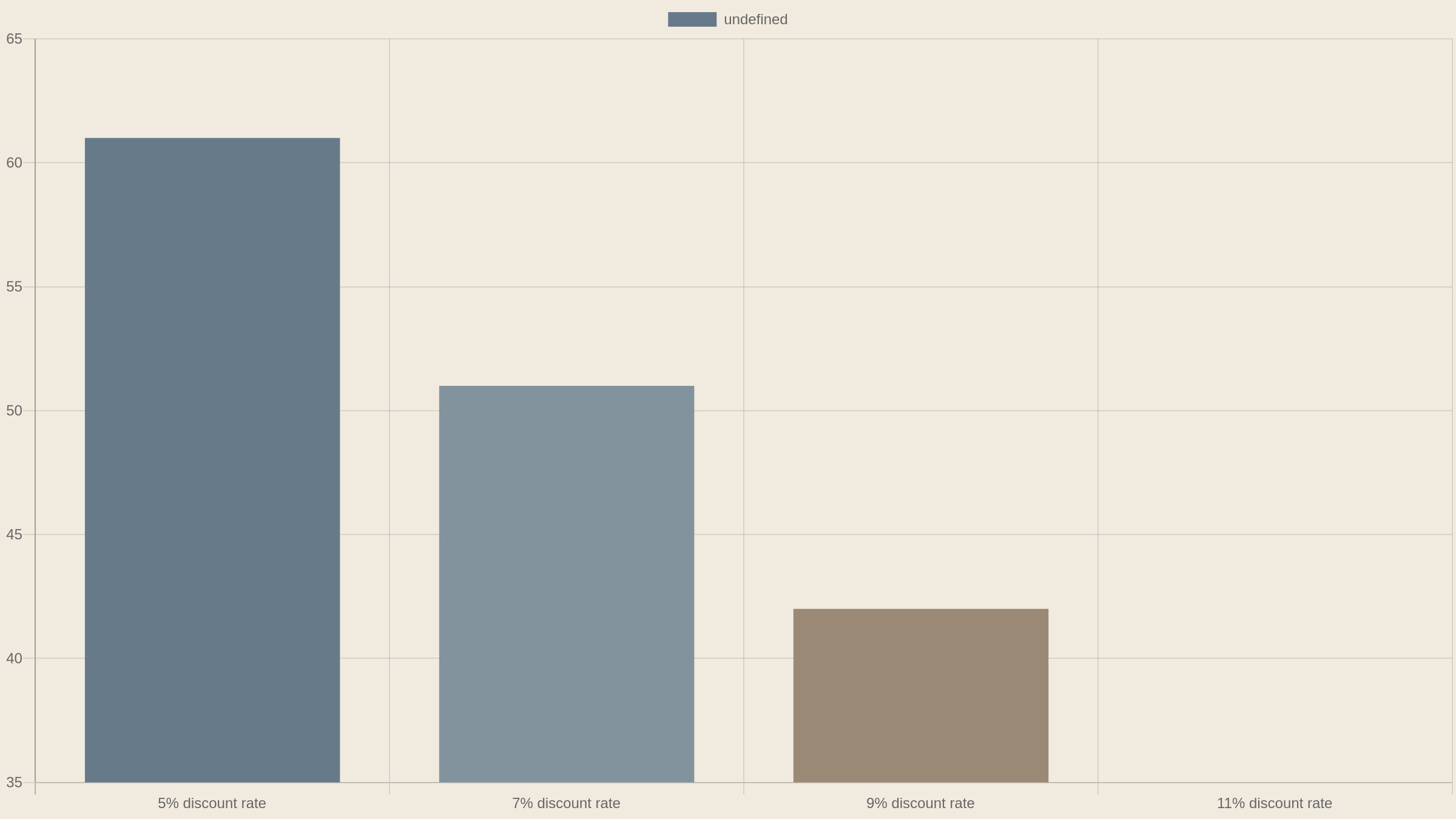
Nothing about the future cash flow changed in that example. Only the discount rate changed. Yet the present value fell by more than 40% between a 5% and an 11% rate.
That is the mathematical heart of the bond-yield problem.
Where Treasury yields enter the stock valuation
In a simplified equity model, the required return on a stock can be thought of as a risk-free rate plus compensation for taking equity risk. The risk-free reference point is usually linked to government bond yields. If a long-term Treasury offers a higher return, investors do not need to accept the same low expected return from a risky stock.
This does not mean a company’s cost of equity moves one-for-one with the 10-year yield. Equity risk premiums move too. Growth expectations move. Inflation expectations move. But the Treasury curve is an anchor.
The Federal Reserve has long described long-term Treasury yields as a combination of expected future short-term rates and a term premium—the extra compensation investors demand for holding long-duration bonds. In 2026, Fed research has highlighted how far-forward rates and term premiums have become more important as fiscal and inflation risks re-emerge.
Why growth stocks have more duration
A mature company can be valuable because it produces large amounts of cash today. A young growth company is often valuable because investors expect much larger cash flows five, ten or fifteen years from now.
That difference creates what I think of as equity duration.
Bond duration measures sensitivity to changes in interest rates. Equities do not have a fixed maturity date, so the analogy is imperfect, but the intuition is powerful: the further into the future the economic value of a business is concentrated, the more sensitive its present value is to the discount rate.
Imagine two companies worth $100 each under the same starting assumptions. Company A produces most of its distributable cash in the next five years. Company B reinvests heavily now and expects the majority of its cash generation in years six through fifteen. If the discount rate rises, Company B’s valuation usually falls more because more of its value is sitting further away.
The chart is illustrative rather than a forecast. The point is the sensitivity relationship, not the exact percentage.
Why a 50-basis-point yield move can create a much larger stock move
Investors sometimes look at a 0.50-percentage-point increase in Treasury yields and wonder how it can justify a 5% or 10% move in a technology stock.
The answer is that valuation models compound small changes over long horizons. A modest increase in the discount rate applies to every future cash flow. If terminal value represents a large part of the company’s estimated worth, the effect becomes especially strong.
Then market structure amplifies the mathematics. Momentum funds reduce exposure. Options hedging changes dealer positioning. Portfolio managers rotate toward banks, energy or value stocks that can benefit from higher nominal rates. Investors who can suddenly earn more than 5% in long-duration government debt demand more compensation before owning an expensive stock.
The first-order change may begin with a few basis points in bonds. The final equity move can be many times larger.
Today’s bond market is a useful real-world example
On August 20, 2026, the U.S. 10-year Treasury yield rose to roughly 4.68% and the 30-year to about 5.22%. A day earlier, the Treasury Department had expanded buybacks of longer-dated bonds after the 30-year yield briefly reached its highest level since 2007.
The underlying concerns were broader than monetary policy alone: elevated oil prices, inflation risks, the scale of U.S. government debt and investor demand for more compensation to hold long maturities.
That pressure hit semiconductor shares particularly hard earlier in the week. Micron fell roughly 7% on August 18 during a broad technology selloff even though the company’s underlying AI-memory demand remained exceptional. I examine that tension in my Micron analysis.
Higher yields create competition for capital
Discounted cash-flow math is only one channel. There is also a simpler portfolio question.
If a 10-year government bond yields 2%, investors may be willing to accept a very high stock valuation because the alternative return is unattractive. If the same bond yields nearly 5%, the hurdle changes. A stock trading at a 30-times earnings multiple has an earnings yield of only about 3.3%. Investors can still prefer the stock because earnings may grow, but they now need to believe in enough growth to justify taking substantially more risk for a lower current earnings yield.
This is why high multiples become harder to defend when bond yields rise. The stock does not merely become worth less in a DCF. It also has to compete with a more attractive risk-free asset.
The P/E multiple is a disguised discount-rate argument
Investors often separate valuation multiples from interest rates, but they are deeply connected.
A high P/E ratio means the market is willing to pay a large amount today for each dollar of current earnings. That usually implies some combination of strong expected growth, high business quality, low risk and a low discount rate.
If the discount rate rises while expected growth does not, the fair multiple should generally fall.
This is why the same company can deserve 35 times earnings in one rate regime and 25 times in another without any change in its products or competitive position.
Multiple compression is simply the market rewriting the price it is willing to pay for time.
But rising yields do not always hurt growth stocks
This is where the simple narrative breaks.
A bond yield can rise because inflation risk increased, because the term premium increased, because the Federal Reserve is expected to hold rates higher, or because the economy is expected to grow faster. Those causes matter.
If yields rise because investors expect stronger real growth, a growth company may also receive higher revenue and profit forecasts. The numerator in the valuation model rises at the same time as the denominator. In that case, stronger expected cash flows can offset a higher discount rate.
Recent Federal Reserve research makes this point more formally. A June 2026 paper found that positive long-run growth shocks can raise expected dividend growth, with particularly meaningful effects for growth firms. Another Fed study published in May emphasized that monetary-policy effects on stocks operate through multiple channels, including yields, equity risk premiums and expected cash flows.
Four types of yield increases
| Yield move | Typical equity implication | Growth-stock risk |
|---|---|---|
| Stronger real growth | Cash-flow expectations may improve | Mixed; can be positive |
| Higher inflation expectations | Discount rates rise; margins may be pressured | Usually negative |
| Higher term premium | Long-duration assets reprice | Often clearly negative |
| More hawkish Fed expectations | Risk-free hurdle rises across markets | Usually negative |
Why profitable growth is more resilient than speculative growth
Not all growth stocks have the same duration.
A company like Amazon has enormous current cash-generating businesses even while it invests heavily in AI. Nvidia generates large current profits. Micron is producing extraordinary free cash flow today. These stocks can still be rate-sensitive because expectations are high, but they are fundamentally different from an early-stage company whose entire valuation depends on profits arriving many years from now.
The more self-funded a growth company is, the less rising rates damage it through financing costs. The more current cash flow it produces, the less of its value sits in a distant terminal value.
That is why I separate profitable growth from promise-only growth when yields rise.
Debt matters too
Higher bond yields do not only affect valuation. They eventually affect the company’s own cost of capital.
A business that needs to refinance debt in a higher-rate environment can face a direct hit to earnings. A company funding expansion through debt must accept a higher hurdle rate for new projects. Venture-backed firms can find external capital more expensive or unavailable.
For a cash-rich company, this channel may be small. For a leveraged growth company, it can be decisive.
How I analyze a growth stock when yields jump
I do not automatically sell because the 10-year Treasury moves higher. I ask five questions.
First, how much of the company’s valuation depends on cash flows more than five years away? Second, is the company profitable and self-funding today? Third, did yields rise because of stronger growth or because of inflation and term-premium stress? Fourth, does the company have debt that must be refinanced soon? Fifth, how demanding is the current multiple relative to the new risk-free return?
The answer often tells me whether a selloff is rational repricing or an opportunity.
What higher yields mean for AI stocks specifically
AI stocks sit at the center of the current tension because they combine enormous current investment with enormous future expectations.
Amazon plans vast AI infrastructure spending. Nvidia is increasingly involved in financing the ecosystem around its own chips. Memory suppliers like Micron are expanding capacity into an extraordinary shortage. These businesses can justify high valuations if AI creates durable cash flow, but higher bond yields force investors to ask harder questions about the timing and certainty of those returns.
That is why I view rising yields as a stress test for the AI trade. The best businesses should survive the valuation reset. The weakest stories depend on cheap capital and distant promises.
My conclusion
Rising bond yields hurt growth stocks for a reason that is much more precise than the market cliché suggests.
A higher risk-free return raises the hurdle rate for risky assets. Future cash flows are discounted more aggressively. Stocks whose value lies far in the future experience the largest mathematical impact. High P/E multiples face competition from bonds that suddenly offer meaningful returns without equity risk.
But the relationship is not mechanical. If yields rise because real growth expectations improve, stronger cash flows can offset the valuation pressure. If the company already generates large profits and funds its own growth, it can be far more resilient than a speculative business dependent on outside capital.
When Treasury yields move sharply, I do not start with the chart. I start with duration, cash flow and the discount rate. That turns a vague macro headline into an investable framework.
Sources and data status
Data status: 20 August 2026. Treasury-yield levels are market observations for that date and will change over time; the valuation mechanics are intended as an evergreen framework.
- Reuters: August 20 bond-market moves and Treasury yields
- Reuters: long-bond volatility and Treasury buybacks
- Federal Reserve: far-forward Treasury rates and long-term yields
- Federal Reserve: monetary policy and stock-market valuation channels
- Federal Reserve: long-run growth shocks and equity yields
This article is educational and reflects my analytical framework. It is not investment advice.
Related bond-market and portfolio guides
If you want the same mechanism framed specifically around technology equities, see our practical equity-duration guide for tech stocks. The underlying fixed-income mechanics are covered in our bond yield and duration explainer, while the ETF savings-plan guide explains why valuation shocks matter differently for diversified portfolios than for concentrated growth positions.