
THE KAPITAL · STOCK ANALYSIS · AUGUST 21, 2026
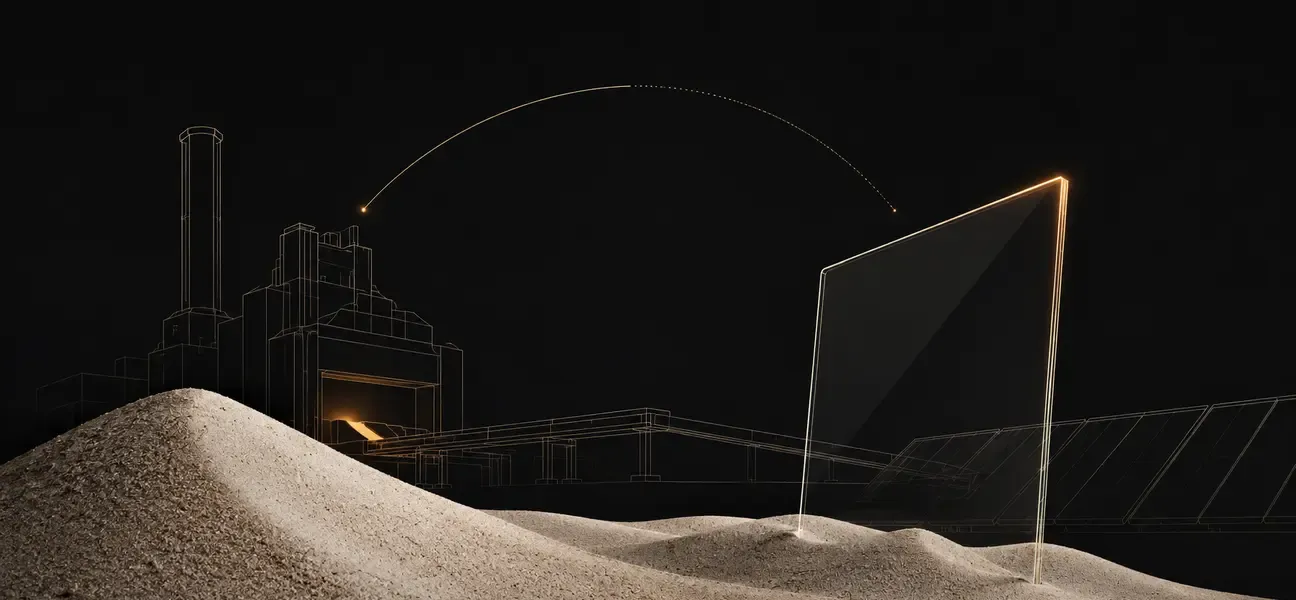
Homerun Resources is trying to turn one of the cheapest industrial inputs on earth into one of the most strategically useful: solar glass. The company has a bankable feasibility study showing a US$670 million project NPV, a proposed financing route for part of the factory, a new memorandum with Brazil’s largest float-glass producer and a stock market value of roughly C$38 million.
That gap looks absurd. It is also where careless analysis begins.
I do not think investors are looking at a hidden US$670 million company that the market has somehow failed to notice. They are looking at a development-stage business that still has to finance, build and operate a nearly US$400 million industrial project while protecting today’s shareholders from being diluted into irrelevance.
The opportunity is real. So is the financing problem.
| Homerun snapshot | Latest disclosed figure | Why it matters |
|---|---|---|
| Primary listing | TSXV: HMR | The Canadian listing is the relevant venue for price discovery. |
| Reference price | C$0.49 on August 18, 2026 | The last independently available TSXV quote used in this analysis. |
| Shares outstanding | Approximately 77.35 million | Before potential future conversions, warrants and new project equity. |
| Approximate market value | C$37.9 million | Tiny beside the scale of the proposed solar-glass project. |
| Solar-glass project NPV | Approximately US$670 million | A project value, not a value that automatically belongs to common shareholders. |
| Initial project CAPEX | Approximately US$396.5 million | More than ten times the current equity value. |
| March 31 cash | C$712,556 | Shows why external capital is not optional. |
Data cut-off: August 21, 2026. Market data are delayed. All scenario values in this article are illustrative, not price targets.
The thesis: the story is becoming more credible, but the capital structure is becoming more important
When The Kapital first examined Homerun Resources in June, the central tension was simple: the vision was large and the treasury was small. Two months later, that tension has not disappeared. It has become more concrete.
Three developments matter.
First, Homerun received a letter of intent from an unnamed European project-finance bank to explore an export-credit facility of up to €170 million. Second, it signed a memorandum of understanding with Cebrace, Brazil’s largest float-glass manufacturer, to evaluate a supply and strategic relationship. Third, it closed an initial C$2 million convertible-security tranche with Lind Partners.
Each development reduces one risk while introducing another.
The bank letter gives the project a plausible debt channel, but it is not a binding financing commitment and it covers only part of the expected capital requirement. The Cebrace agreement adds industrial credibility, but it remains an evaluation framework rather than a definitive operating contract. The Lind money strengthens near-term liquidity, but it is expensive bridge capital secured against the company’s assets and accompanied by conversion rights, warrants, fees and repayment obligations.
My view is that Homerun has moved from “interesting concept” toward “financeable project candidate.” That is genuine progress. But the stock should still be valued as a probability-weighted claim on future execution, not as a miniature version of the completed factory.
What Homerun is actually building
Homerun’s strategy starts with high-purity, low-iron silica sand in Bahia, Brazil. The company does not want to remain a commodity supplier. It wants to move downstream through purification, solar-glass manufacturing, advanced silica materials and energy technologies.
The logic is attractive because vertical integration can convert a low-value raw material into a high-value industrial product. The planned chain begins with the Santa Maria Eterna silica district, continues through a proposed 350,000-tonne-per-year 3N purification plant and culminates in a 1,000-tonne-per-day solar-glass facility.
The large factory is the valuation engine. The smaller purification plant may be the credibility engine.
Homerun has estimated Phase 1 CAPEX of about US$9.38 million for the 3N plant. That is still meaningful for a company of this size, but it is much more achievable than a US$396.5 million glass complex. If the company can finance, build and operate the smaller plant, qualify product and turn early deliveries into recurring sales, it would demonstrate that the path from sand to customer is more than a presentation.
This distinction matters. A development company does not become less risky because its project is large. It becomes less risky when successive promises turn into operating evidence.
The feasibility study is powerful—but it is not the equity value
The May 2026 bankable feasibility study is the strongest part of the bull case. At 100% production, it estimates a project NPV of approximately US$670 million and an internal rate of return of 20.2%. The model assumes initial CAPEX of approximately US$396.5 million, production ramping toward roughly 288,300 tonnes a year and annual revenue of around US$294.3 million in 2030.
Those are industrial numbers, not explorer numbers.
They also depend on a long chain of assumptions: construction cost, financing terms, ramp timing, selling prices, operating costs, product qualification, plant availability and customer demand. A bankable feasibility study is more serious than a preliminary economic dream, but it is still a model of a project that does not yet exist.
The most common valuation error is to compare the US$670 million NPV directly with a C$37.9 million market capitalization and call the difference “upside.” That ignores the bridge between project value and shareholder value.
The factory needs capital. Lenders will require security, covenants and repayment. Strategic partners may require economics or ownership. Any equity contribution could add shares. Delays can raise costs. The company may need corporate working capital while the project is financed and constructed. And the current shareholders own a claim on the company after all those obligations—not the project NPV before them.
The discount is therefore rational. The debate is whether it is too large.
The €170 million letter is the most important financing signal so far
On July 28, Homerun said it had received a signed letter of intent from a European project-finance bank interested in arranging and syndicating an export-credit facility of up to €170 million. The contemplated debt could run for as long as 14 years from commissioning and is intended to align with the equipment package in the feasibility study.
This matters for two reasons.
First, export-credit financing is structurally better suited to a long-life industrial plant than short-duration corporate bridge debt. Long-tenor project debt can match repayments to future operating cash flow. Second, the involvement of a specialist project financier suggests that the factory has progressed far enough to receive institutional attention.
But I would not call the project funded.
The lender is unnamed. The letter is non-binding. Final commitment depends on due diligence and credit approvals. And €170 million does not cover a US$396.5 million capital budget. Homerun still needs the remaining debt, equity, public support, strategic capital or some combination of all four.
This is the right direction. It is not the finish line.
Cebrace makes the industrial story more believable
The August 19 memorandum with Cebrace may be strategically more interesting than the market initially appreciated. Cebrace is a joint venture of Saint-Gobain and NSG Group and is described as Brazil’s leading float-glass producer. Under the memorandum, the parties will evaluate a relationship in which Cebrace could supply solar-module back glass and provide advice on development, implementation and operation of Homerun’s plant.
That could improve the project in three ways.
It could give Homerun access to experienced glass-manufacturing knowledge. It could strengthen a domestic supply chain rather than forcing the company to build every element itself. And it could allow the planned facility to shift more capacity toward higher-margin front glass while Cebrace supplies back glass.
The structure is strategically elegant. It also shows why partnerships can create more value than full ownership in a capital-intensive project. A small company should not insist on doing everything alone if a credible industrial partner can reduce execution risk.
Still, an MOU is not a purchase order, a joint venture or a binding supply agreement. Investors should wait for definitive terms, economics and responsibilities. The name improves credibility. The contract will determine value.
The Lind financing buys time at a visible price
Near-term liquidity was the obvious weakness in the March balance sheet. Homerun reported C$712,556 of cash, used C$811,240 in operating activities during the first quarter and recorded a C$1.19 million net loss. Management also disclosed material uncertainty about the company’s ability to continue as a going concern without additional financing.
The initial Lind tranche addresses that problem, but not cheaply.
Homerun received C$2 million and issued a security with a C$2.2 million face value, including prepaid interest. The company also pays closing and placement fees, issued 233,333 shares to Benchmark and granted Lind 1.85 million warrants exercisable at C$0.66. The principal can be converted at C$0.66. After a six-month holiday, scheduled cash repayments of C$111,111 per month run from months seven through 24. The security is senior and secured over company assets and subsidiary shares.
Management calls this a bridge. That is the right word. Bridges are useful when they reach the other side.
If larger project financing arrives before amortization becomes burdensome, the Lind capital may prove rational. If strategic financing slips, the monthly repayments, interest settlement in shares, warrants and potential conversions can turn temporary liquidity into persistent dilution pressure.
The announced facility can expand by another C$13 million only by mutual agreement and subject to approvals. Investors should not treat that undrawn amount as cash in the bank. They should treat it as optional capital with a likely cost.
The market is pricing the financing gap—not ignoring the project
At approximately C$0.49 and 77.35 million shares, Homerun’s equity value is around C$37.9 million. The stock was down roughly 50% over the preceding 52 weeks at the latest available data point. That looks strange beside a positive feasibility study and a cluster of project announcements.
I think the explanation is straightforward.
The market believes Homerun may have a valuable project. It does not yet know how much of that value will remain attributable to the current share base.
There is no earnings multiple to anchor the stock. There is no mature free cash flow. Reported miscellaneous sales were tiny. The relevant valuation inputs are probability of financing, retained project ownership, dilution, time to production and the discount rate investors apply to management’s execution.
This makes Homerun less a conventional mining stock than a listed project-finance option. The share price can move sharply when one probability changes: a definitive lender mandate, a binding commercial agreement, a construction decision or a failed financing step.
Valuation: three paths, not one precise target
I do not believe a single discounted-cash-flow target is honest here. The variables that matter most have not been fixed. A scenario map is more useful.
Bear case: C$0.20–C$0.35
- The export-credit letter does not become a binding commitment.
- Cebrace remains an MOU without definitive economics.
- The 3N plant or first recurring sales are delayed.
- Corporate cash burn forces repeated equity issuance or heavier use of convertible capital.
- The market values Homerun primarily on residual asset optionality.
Base case: C$0.70–C$1.10
- The 3N purification pathway is financed and advances toward construction.
- The company demonstrates repeat silica sales or customer qualification.
- Cebrace negotiations produce a more concrete industrial agreement.
- The export-credit process advances without a punitive corporate equity raise.
- The market assigns a larger—but still heavily discounted—value to the solar-glass project.
Bull case: C$1.50–C$2.50
- A credible financing package covers a substantial part of the factory CAPEX.
- A strategic partner absorbs part of the execution and equity burden.
- Binding offtake or supply arrangements validate the commercial model.
- Construction timing becomes visible and dilution remains manageable.
- The market begins to value Homerun as an emerging industrial platform rather than a financed-to-finance developer.
These ranges use the current share count only as a reference. Any future issuance changes the per-share outcome. That is not a footnote—it is the variable investors must monitor most closely.
What could make the stock work
The bull case does not require the market to capitalize the full US$670 million project NPV. It requires a sequence of evidence that reduces the probability discount.
The first catalyst is a definitive project-finance mandate with disclosed conditions. The second is clarity on how the remaining capital stack will be funded. The third is a binding Cebrace agreement or comparable strategic partnership. The fourth is progress on the 3N plant, where a smaller capital commitment could create earlier operating proof. The fifth is recurring commercial sales rather than sample orders and first deliveries.
Each milestone answers a different question.
Can the project attract debt? Can Homerun fund its equity share? Can an experienced industrial partner help operate it? Can the company build anything at smaller scale? Will customers pay for the product?
If those answers arrive in the right order, the current valuation can look unusually low. If they do not, the feasibility study will remain a valuable document attached to an underfunded company.
The risks are concentrated and severe
Financing risk: The project CAPEX dwarfs the company’s market value and balance sheet. A funding gap can delay the project or transfer economics away from common shareholders.
Dilution risk: Warrants, conversion rights, placement shares and future equity can expand the share count. Even a successful project can disappoint shareholders if too much value is issued away before construction.
Execution risk: Homerun has not yet demonstrated operation of a solar-glass factory at the proposed scale. Engineering, procurement, construction and ramp-up can all deviate from the feasibility model.
Commercial risk: MOUs and letters of intent can fail to become binding contracts. Customer qualification, price and volume determine whether projected margins are achievable.
Market risk: Chinese solar-glass capacity, pricing pressure, trade policy and changes in photovoltaic demand can alter project economics before production begins.
Jurisdiction and infrastructure risk: Brazilian incentives and local support are helpful, but permits, logistics, power, construction and policy still have to align.
Complexity risk: Homerun is pursuing silica, solar glass, advanced materials, energy storage and energy-management activities. Optionality can become distraction when management capital is scarce.
Liquidity risk: This is a small, volatile security. Spreads and trading volume matter. I would treat the TSX Venture listing as the primary venue and use limit orders rather than assume frictionless execution.
My conclusion: Homerun is no longer only a sand story, but it is still a financing story
Homerun Resources has done something important since June. It has made the industrial vision harder to dismiss.
The feasibility study gives the solar-glass project economic shape. The European bank letter sketches a plausible debt route. The Cebrace memorandum adds an experienced industrial name. The Lind tranche gives the company near-term working capital. The 3N plant offers a smaller bridge from resource ownership to operating proof.
But none of those facts removes the central constraint.
A C$38 million company is trying to develop a nearly US$400 million factory. The value creation can be extraordinary if debt, strategic capital and commercial partners carry most of the burden. The dilution can be extraordinary if the common equity has to carry too much of it.
That is why I see Homerun as a speculative venture-value opportunity, not a conventional value investment. The stock is cheap relative to the project it wants to own. It is not obviously cheap relative to the capital it still needs.
The sand has been found. The glass economics have been modeled. The partners are beginning to appear.
Now the company has to build the bridge without giving away the destination.
The Kapital rating: Speculative Venture Value Opportunity.
Risk level: Very high.
Indicative investment horizon: Three to seven years.
Primary listing: TSX Venture Exchange, HMR.
Sources and important notice
This analysis is based primarily on Homerun Resources’ May 12 feasibility-study release, its July 28 project-finance update, the August 17 Lind financing terms, the August 19 Cebrace memorandum, its unaudited financial statements for the quarter ended March 31, 2026, and delayed market data available on August 21, 2026. Company feasibility estimates and forecasts are management assumptions and may not be achieved.
This article is for information and educational purposes only. It is not investment advice, a recommendation, or an invitation to buy or sell securities. Small-cap development companies can lose substantial value, and investors should verify all filings, financing terms and risk disclosures independently.
Related venture-value cases: when dilution decides the outcome
Homerun is not the only small-cap where the asset can look far more valuable than the current equity while financing determines how much of that upside existing shareholders actually keep. Our EcoGraf analysis examines almost the same problem in graphite: a large project NPV, a credible financing path and a funding gap that can materially change value per share. Our Diginex analysis shows a different version of dilution risk, where an all-share acquisition and warrants can transform the denominator even if the underlying business combination succeeds. And our Beyond Meat turnaround analysis illustrates how balance-sheet repair can protect a business while still being painful for existing equity holders.
The common lesson across all four cases is simple: a large opportunity is not the same thing as a large per-share opportunity. Financing structure, retained ownership and the fully diluted share count decide how much of the operating success ultimately reaches today’s shareholder.