

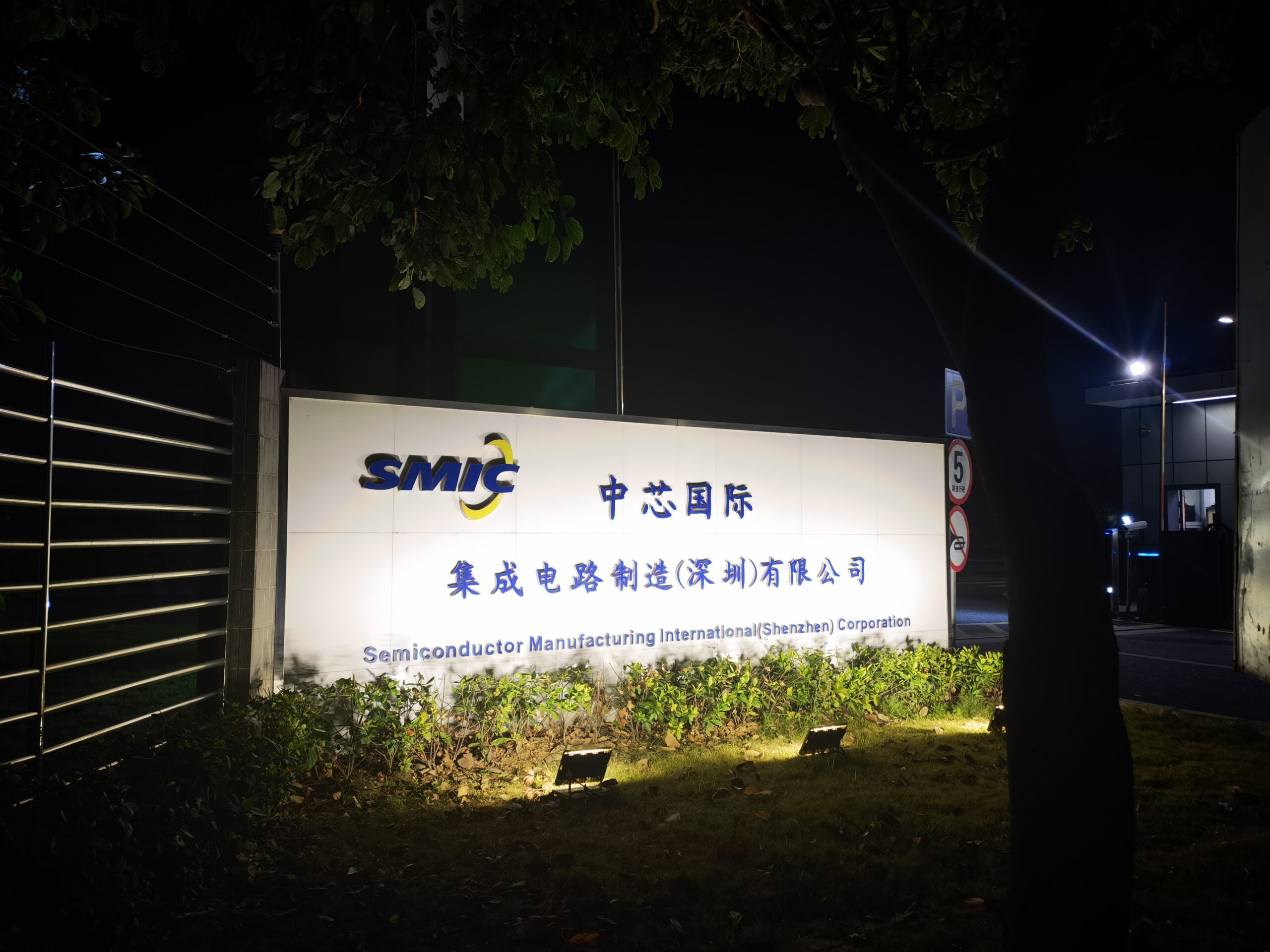
Data as of September 11, 2026. Semiconductor Manufacturing International Corporation has become one of the most strategically important companies in China. It is also one of the hardest to value.
In the second quarter of 2026, SMIC reported revenue of $3.01 billion, up 36.1% year over year. Profit attributable to shareholders rose to $479.2 million, more than tripling from a year earlier. Gross margin improved to 25.3%, wafer shipments increased 20.1%, and capacity utilization reached 93.7%.
The operational momentum is obvious. The valuation is less comfortable. SMIC’s Hong Kong shares traded around HK$63.45 on September 10, while market data implied a trailing P/E ratio above 60. The stock is therefore not being priced like a conventional foundry. Investors are paying for strategic scarcity, AI demand and the possibility that China’s semiconductor self-sufficiency drive creates years of structurally high utilization.
The central question is whether that premium is justified by future earnings power or whether the market has already capitalized too much of the geopolitical story.
Q2 was a genuine acceleration
SMIC’s second-quarter revenue reached $3.01 billion for the first time, rising roughly 20% sequentially and 36.1% year over year. Gross profit increased to about $760.6 million, and gross margin expanded from roughly 20% in the previous quarter to 25.3%.
Profit attributable to shareholders surged to $479.2 million from $132.5 million a year earlier. The result comfortably exceeded market expectations.
This was not only an accounting story. Wafer shipments increased, selling prices improved and factories ran at high utilization. That is the combination investors want to see in a foundry upcycle.
Sources: SMIC Q2 2026 results as reported in the company filing and Reuters.
AI demand is helping even outside leading-edge GPUs
When investors hear “AI chips,” they often think only of the most advanced GPUs. SMIC’s opportunity is broader. AI servers, data centers and intelligent devices also require power-management chips, connectivity chips, controllers, sensors and many mature-node components.
That matters because SMIC does not need to match TSMC at the absolute frontier to benefit from the AI cycle. A large AI system uses an ecosystem of semiconductors built across multiple process nodes.
Management has indicated that AI-related industrial momentum is supporting broad demand and helping tighten foundry capacity. This is important because tighter utilization improves pricing power and factory economics.
Pricing power may be the biggest change
SMIC said it had negotiated higher prices for some of its most sought-after capacity and expected those increases to apply to wafers processed in the third quarter.
That is a major signal. Foundries often struggle when capacity is abundant because customers can pressure pricing. When utilization approaches the mid-90% range, the bargaining balance shifts.
Higher wafer prices can improve margins quickly because a semiconductor fab has enormous fixed costs. Once equipment and facilities are already operating, incremental pricing flows strongly into gross profit.
The third-quarter guidance reflects this dynamic. SMIC expects revenue to rise another 2% to 4% sequentially and gross margin to reach 26% to 28%.
China accounts for more than 90% of revenue
Roughly 90% of SMIC’s Q2 revenue came from China. That concentration is both a strength and a risk.
The strength is strategic demand. Chinese chip designers increasingly want domestic manufacturing capacity because export restrictions and supply-chain uncertainty make local sourcing more valuable.
The risk is that SMIC remains heavily tied to one economic and policy environment. If domestic electronics demand weakens or state-backed capacity expands too aggressively, the current tightness could eventually become oversupply.
The semiconductor self-sufficiency theme is real
China has spent years trying to reduce dependence on foreign semiconductor technology. SMIC sits at the center of that effort because advanced chip design is useless without manufacturing capacity.
This creates a strategic moat that is different from a normal commercial moat. Customers may choose SMIC not only because of price and technology, but because local manufacturing reduces geopolitical supply risk.
That strategic value can support higher utilization and investment. But investors should be careful: strategic importance does not automatically mean high shareholder returns. Governments can encourage overinvestment, and capital-intensive industries can destroy value even while serving national priorities.
Why SMIC still trails TSMC economically
Our broader semiconductor comparisons matter here. TSMC’s Q2 2026 gross margin was 67.7%, far above SMIC’s 25.3%. TSMC benefits from leadership in advanced nodes, enormous scale and a customer base that includes many of the world’s most profitable chip designers.
SMIC’s economics are improving, but the gap remains huge. That makes the current valuation premium difficult to justify using margin quality alone.
Investors are paying for growth and strategic scarcity, not present-day profitability.
The ASML constraint remains fundamental
Advanced semiconductor manufacturing depends on lithography equipment, especially EUV systems. Export controls limit China’s access to some of the most advanced tools.
That means SMIC must push existing equipment further, improve process engineering and focus on nodes it can manufacture economically without unrestricted access to the full global equipment stack.
This is both an engineering challenge and a capital-efficiency challenge. Producing a technically advanced chip is not enough if yields are poor or costs are too high.
The market often celebrates technology milestones before seeing whether those milestones translate into attractive margins.
Utilization at 93.7% is excellent — but cyclical
High utilization is one of the strongest indicators of foundry profitability. At 93.7%, SMIC’s factories are operating close to full economic capacity.
That allows fixed depreciation and labor costs to be spread across more wafers. It also gives management more confidence to negotiate higher prices.
But utilization is cyclical. Semiconductor shortages can quickly become gluts when many companies add capacity at the same time.
Investors should therefore ask whether current demand is structural or simply a temporary squeeze created by AI-related ordering and supply constraints.
Capacity expansion is necessary and dangerous
SMIC plans to bring new production lines online faster to address supply constraints. That is logical while utilization is high.
Yet every new fab requires billions of dollars of capital before meaningful revenue appears. If demand remains strong, new capacity can create years of growth. If demand normalizes, depreciation remains even when machines are underused.
This is the central paradox of foundry investing: the best operating environment often encourages the investment that eventually weakens the cycle.
The smartphone mix is improving
SMIC also saw stronger demand from smartphone-related customers. This is useful because it diversifies the current AI narrative.
A foundry with demand across smartphones, industrial chips, consumer electronics and AI infrastructure has a more stable utilization base than one dependent on a single end market.
The challenge is maintaining pricing across those categories. Mature-node products can become commoditized if too much capacity enters the market.
At 63 times earnings, expectations are high
SMIC’s Hong Kong shares traded around HK$63.45 on September 10. Market data placed the trailing P/E ratio around 62 to 64 and forward P/E in the mid-40s.
That is a substantial multiple for a manufacturing company with a 25% gross margin.
The valuation only makes sense if investors believe earnings can rise much faster than revenue over the next several years through higher utilization, better pricing and mix improvement.
If gross margin can move toward 30% while revenue continues growing at a healthy rate, earnings could indeed scale quickly. But the market is already paying for a meaningful part of that improvement.
A strategic premium should not become an unlimited premium
SMIC deserves some premium because China’s domestic semiconductor ecosystem has few comparable manufacturing assets. Its capacity is strategically valuable and difficult to replicate quickly.
But strategic scarcity can tempt investors into ignoring basic return-on-capital math.
A foundry still has to earn enough gross profit to cover depreciation, R&D and massive capital expenditure. The higher the stock valuation, the more future profitability must improve to justify today’s price.
SMIC versus mature-node peers
Traditional mature-node foundries generally trade at lower multiples because growth is cyclical and technology differentiation is weaker.
SMIC deserves a higher multiple than those peers because its domestic strategic position is unusual and demand growth is strong.
The question is degree. A multiple above 60 times trailing earnings implies that investors expect a much more profitable future company than the one visible in today’s income statement.
Why AI could extend the cycle
The bullish case is that AI is not a one-year ordering boom but a multi-year infrastructure buildout.
Every new data center requires not only accelerators but power chips, networking, storage controllers, sensors and supporting electronics. As AI functions spread into phones, cars and industrial equipment, semiconductor content per device rises.
That can keep mature and specialty nodes tight even while leading-edge capacity expands elsewhere.
If this happens, SMIC’s current utilization and pricing environment could persist longer than a traditional chip cycle.
The geopolitical risk cuts both ways
Export restrictions can limit SMIC’s access to equipment and advanced technology. That is negative.
At the same time, those restrictions encourage Chinese customers to qualify domestic alternatives and strengthen local supply chains. That is positive.
SMIC therefore sits in an unusual position where geopolitical pressure can simultaneously constrain production technology and increase customer demand.
The net effect depends on whether engineering progress can keep pace with customer requirements.
Three scenarios for SMIC stock
| Scenario | Gross margin | Utilization | Valuation implication |
|---|---|---|---|
| Bear | Falls toward low-20s | Capacity loosens | Current multiple compresses sharply |
| Base | Mid- to high-20s | High-80s to low-90s | Earnings grow, but valuation remains demanding |
| Bull | Moves above 30% | Stays above 90% | Strategic premium becomes easier to defend |
What would make me more bullish?
I would want Q3 gross margin near the top of the 26% to 28% guidance range, continued utilization above 90% and evidence that higher wafer pricing sticks without hurting volume.
I would also want new capacity to ramp with strong customer commitments rather than speculative demand forecasts.
Most importantly, earnings growth needs to catch up with the valuation. The company cannot remain on a 60-times multiple forever if profit growth normalizes.
What would break the thesis?
A sharp decline in utilization would be the clearest warning because foundry economics deteriorate rapidly when expensive equipment sits idle.
A second risk is aggressive domestic capacity expansion that creates oversupply.
A third risk is tighter technology restrictions that materially constrain yield or node progress.
Finally, valuation itself is a risk. A good company can still be a poor investment if the price assumes too much success.
My view on SMIC stock
SMIC is one of the most strategically important technology companies in China, and Q2 2026 showed why. Revenue grew 36%, profit more than tripled, utilization reached 93.7% and management gained enough pricing power to raise wafer prices.
Those are excellent operating signals.
But the stock is not cheap. At more than 60 times trailing earnings, investors are paying for a future in which gross margin continues improving, capacity remains tight and China’s semiconductor localization effort keeps demand strong.
I think the business is becoming better faster than many traditional foundries, but the valuation already recognizes a large part of that story.
For me, SMIC is more attractive as a strategic growth company than as a value stock. I would prefer either a lower entry multiple or clearer evidence that gross margin can sustainably move above 30%.
The company does not need to become TSMC to succeed. It only needs to become significantly more profitable than it is today. At the current share price, however, the market is already assuming that transformation is well underway.
Sources
- Reuters — SMIC Q2 2026 results
- SMIC Q2 operating metrics and guidance
- StockAnalysis — SMIC market data
- TSMC Q2 2026 results for peer comparison
This article is independent analysis, not investment advice. Scenario analysis is illustrative and not a price target.
How SMIC fits into the broader AI infrastructure cycle
SMIC is not a direct substitute for the leading-edge AI accelerators sold by Nvidia or designed by major U.S. chip companies. Its opportunity sits one layer wider: every AI server and intelligent device also requires power-management chips, connectivity components, controllers and other semiconductors that can be manufactured on less advanced nodes.
That makes our Qualcomm analysis a useful comparison. Qualcomm shows how AI demand is spreading beyond the traditional GPU market into connectivity and edge computing. Our Corning analysis makes the same point from infrastructure: AI spending creates demand across an ecosystem, not only for the most visible chip.
For SMIC, this broader demand matters because it can keep mature and specialty nodes highly utilized. If utilization stays above 90% and customers accept higher wafer prices, earnings can grow faster than capacity. That is the operating leverage investors are paying for today.
The valuation still requires discipline. Strategic importance and geopolitical scarcity are real, but they do not eliminate the economics of a capital-intensive foundry. The next few quarters need to show that stronger pricing and utilization are translating into sustainable margin improvement rather than a temporary peak.