

The Kapital · US Stock Analysis · 20 August 2026
Tesla has spent years asking investors to value a future that the current income statement could not yet show. That gap is now becoming measurable. Reuters reported that Tesla is preparing to launch Cybercab rides in Austin as soon as August, beginning with employee use before a broader public rollout. The timing matters because the traditional auto business is generating thinner margins while capital expenditure rises. Robotaxi is no longer a distant narrative. It is becoming the product that has to prove why Tesla deserves to be valued like something much larger than a carmaker.
I have always thought the easiest mistake with Tesla is arguing about the wrong business. Bears often value the company like a mature automaker and conclude the stock is absurd. Bulls often value autonomous driving, robotics, energy and AI as if commercial success were already inevitable. Both approaches can become intellectually lazy.
The more useful question is probabilistic: how much value must Tesla create outside the conventional vehicle business to support the equity value investors are paying today? Cybercab gives us a concrete place to begin answering it.
Cybercab is moving from theater to operations
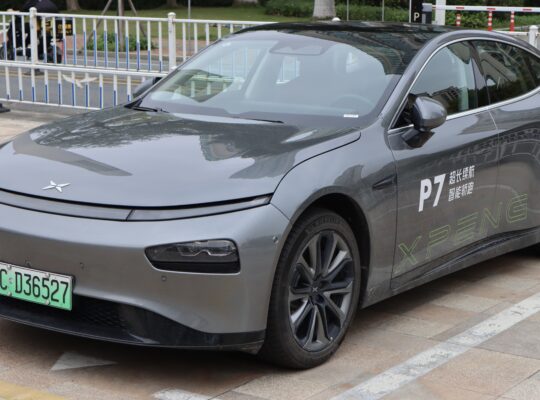
The important part of the latest report is not that Tesla has another autonomous prototype. It is that the company is preparing a real operating launch in Austin. Reuters, citing The Information, said Tesla could begin offering rides in Cybercab vehicles as soon as August, first to employees and later to the public. The vehicle has no steering wheel or pedals, which makes it fundamentally different from simply running supervised software in a conventional Model Y.
That distinction matters. A steering-wheel-free vehicle forces the technology, regulation and fleet operation to work together. There is no human-driver fallback built into the product architecture. If Tesla can operate these vehicles safely, cheaply and at high utilization, Cybercab becomes much more than another car model. It becomes a unit of productive infrastructure.
The economics of that infrastructure are what interest me. A privately owned vehicle spends most of its life parked. A robotaxi can theoretically generate revenue for many hours a day. If the vehicle is inexpensive to manufacture, energy-efficient and cheap to maintain, the lifetime revenue per dollar of manufacturing cost can be dramatically higher than in a normal car sale.
That is the bull case in one sentence. The problem is that almost every variable in that sentence still needs proof at scale.
The current auto economics are not carrying the valuation
Tesla reported second-quarter 2026 revenue of $28.236 billion, up 26% from a year earlier. That sounds healthy until you look at profitability. GAAP operating income was only $398 million, down 57%, and the operating margin was 1.4%. Free cash flow was negative $1.092 billion while capital expenditure reached $5.789 billion.
Those are not financial characteristics that support a trillion-dollar-plus equity value on the auto business alone. Tesla still has a strong balance sheet, with cash, cash equivalents and investments of $43.524 billion at quarter end. Liquidity is not the problem. The issue is return on capital.
When a business spends nearly six billion dollars in a quarter and produces negative free cash flow, investors need confidence that the spending is building assets with very high future returns. If the money is simply required to defend market share in increasingly competitive electric vehicles, the valuation compresses. If it is building an autonomous network with software-like economics, the story changes completely.
Deliveries are large enough that small margin changes matter enormously
Tesla delivered 480,126 vehicles in the second quarter. At that scale, the company does not need spectacular unit growth to create large changes in earnings. It needs better economics per vehicle.
This is where autonomy could change the structure of the business. If buyers pay recurring software fees, Tesla receives more lifetime revenue from the installed base. If Tesla owns robotaxi fleets, it can monetize miles rather than vehicles. If third-party owners add cars to a network, Tesla could potentially collect high-margin platform revenue without financing every car itself.
But these models have very different capital requirements. An owner-operated fleet is capital intensive. A marketplace model is lighter. A software subscription is lighter still. Investors should not treat all autonomous revenue as equally valuable.
I want to know who owns the Cybercab, who pays for insurance, how quickly the vehicle depreciates, what utilization Tesla can achieve, what cleaning and maintenance cost, how regulators constrain geographic expansion and how much remote assistance is required. Those details determine whether a robotaxi network has software economics or simply becomes another transportation fleet.
The strongest advantage may be manufacturing, not the algorithm
Most autonomous-driving debates focus on neural networks, sensors and data. I think manufacturing can be equally important. A robotaxi network needs cheap vehicles in enormous quantities. Tesla already knows how to build hundreds of thousands of electric vehicles per quarter. If Cybercab can be manufactured materially below the cost of a conventional passenger car, that creates an advantage that a pure software company cannot easily replicate.
It also creates a different kind of scaling loop. More vehicles generate more operating data. More data can improve the system. Better autonomy can increase utilization. Higher utilization improves returns on vehicles, which makes it rational to deploy more vehicles.
That loop is powerful in theory. It can also run backward. If intervention rates remain high, insurance is expensive or utilization is weak, every additional vehicle adds capital without generating an attractive return.
Regulation is not a footnote
A steering-wheel-free Cybercab is a regulatory product as much as an engineering product. Local permissions, federal vehicle standards, liability rules and insurance frameworks can determine where the system operates and how quickly it scales.
This is why a successful launch in Austin would be important but insufficient. Autonomous networks need geographic repetition. The economic value comes from proving that the system can move from one favorable city to many different traffic environments without rebuilding the entire operational stack each time.
I would rather see five cities with improving unit economics than fifty announcements. Scale should mean repeatability, not headlines.
The valuation already assumes that Tesla becomes more than a manufacturer
Reuters described Tesla as roughly a $1.4 trillion company around its July results. The exact market capitalization changes every day, but the order of magnitude is what matters. A company valued above a trillion dollars cannot justify itself through a low-single-digit operating margin in automobiles.
Suppose Tesla eventually generated $20 billion of normalized annual operating profit from vehicles and energy. Even applying a generous 25-times multiple would produce $500 billion of value. That is a very successful industrial company, but still far below the market value investors have recently assigned.
The gap must come from autonomy, robotics, software, energy storage growth or some combination of them. Robotaxi is therefore not optional to the valuation narrative. It is one of the largest bridges between current earnings and current price.
My three robotaxi scenarios
In my bear case, Cybercab works technically in limited geofenced areas but remains operationally expensive. Regulation slows expansion, remote support remains significant and competitors offer comparable services. Tesla still earns software revenue from autonomy, but the network never becomes a dominant transportation platform. In that world, I would struggle to justify an equity value much above $650–800 billion without major success in robotics or energy.
In my base case, Tesla proves reliable unsupervised operation across several major US markets, manufacturing cost is attractive and the company develops a hybrid model of owned fleets plus customer-owned vehicles. Autonomy becomes a large recurring-profit business over time. I can then justify roughly $1.0–1.3 trillion of value, depending on the pace of deployment and margins.
In my bull case, Cybercab scales globally, miles become the core monetization unit and Tesla develops network effects that materially reduce customer acquisition and operating cost. If robotaxi can produce tens of billions of high-margin annual profit while Optimus and energy add additional optionality, a valuation above $1.5 trillion becomes defendable.
| Scenario | Equity value framework | What has to happen |
|---|---|---|
| Bear | $650–800bn | Limited autonomy economics, auto business dominates |
| Base | $1.0–1.3tn | Multi-city scale, improving fleet economics |
| Bull | $1.5tn+ | Global platform economics plus robotics optionality |
These are not price targets. They are a way to expose what the current valuation requires. The important conclusion is that modest robotaxi success is not enough. Tesla needs unusually large success.
What I would measure instead of listening to the narrative
First, paid autonomous miles. Not demonstration miles, not supervised miles, but commercial miles where customers actually pay.
Second, interventions or remote-assistance events per thousand miles. Tesla may not disclose the perfect metric, but any credible operating data that shows a declining need for human support matters enormously.
Third, revenue per deployed vehicle and utilization hours. A robotaxi that is technically autonomous but idle most of the day is a poor capital asset.
Fourth, insurance and maintenance cost per mile. Those costs can destroy the apparent gross margin if they are underestimated.
Fifth, capex intensity. If every dollar of robotaxi revenue requires a large amount of incremental Tesla-owned vehicle capital, the business deserves a lower multiple than a capital-light network.
Energy is becoming an underappreciated stabilizer
One reason I am less bearish on Tesla than the auto margin alone might suggest is that the company is not entirely dependent on vehicle economics. Energy storage has become a meaningful growth platform. Large-scale batteries solve a real grid problem as renewable penetration increases and electricity demand from data centers grows.
The energy business does not need to justify Tesla’s entire valuation. It simply needs to reduce the amount of value autonomy must carry. A diversified set of high-growth businesses gives the company more ways to grow into its market capitalization.
Still, I would not use energy as an excuse to avoid the robotaxi question. The equity value is too large. Autonomy remains central.
The balance sheet buys Tesla time
With more than $43 billion of cash, cash equivalents and investments, Tesla can fund an expensive transition. This is an important advantage. A weaker company facing negative free cash flow would have to slow investment or raise capital at exactly the wrong time.
Tesla can do the opposite. It can spend aggressively while the economics are still forming. That strategic flexibility is worth something. But it also creates a governance challenge: abundant liquidity can hide poor returns for longer than a tight balance sheet would allow.
I therefore care less about whether capex is high than whether each new cohort of infrastructure shows better economics than the previous one.
What could break the thesis
The most obvious risk is technical. If true unsupervised autonomy remains unreliable in complex environments, the network cannot scale as modeled. The second is regulatory: a serious safety event could slow approvals and dramatically increase insurance or compliance costs.
The third is competitive. Waymo and other autonomous operators do not need to beat Tesla on manufacturing volume if they can dominate the most valuable urban markets. The fourth is financial. If the conventional vehicle business enters a prolonged price war while AI and robotaxi capex continue to rise, the cash-generation gap could persist for years.
Finally, there is valuation risk. Tesla can execute well and still deliver a disappointing stock return if the market has already paid for execution years in advance.
What would make me more constructive
A broad public Cybercab launch with transparent operating metrics would be the first step. The second would be evidence that unit economics improve as fleets scale. The third would be geographic expansion that does not require a proportional increase in human support. The fourth would be a recovery in consolidated operating margin while autonomy investment remains high.
If those pieces appear together, Tesla begins to look less like an expensive manufacturer funding experiments and more like a transportation platform using manufacturing as its distribution engine.
My conclusion
Cybercab is the most important Tesla product launch in years because it directly tests the part of the valuation that has always been hardest to model. A conventional car can be valued using units, price, gross margin and replacement cycles. A robotaxi network creates a completely different economic system.
I think Tesla has real advantages: manufacturing scale, a large installed base, software integration, capital, brand and an enormous amount of driving data. I also think investors routinely underestimate how difficult it is to turn technical autonomy into a regulated, insured, cleaned, maintained and profitable transportation network.
At the current scale of the valuation, I would not buy Tesla because Cybercab launches. I would buy only if the operating data begin to show that the network economics are converging toward the bull case faster than the market expects.
For context on how I think about highly valued technology businesses when narrative outruns current earnings, see The AI Trade Cracks. Tesla is a different company, but the valuation discipline is the same: future cash flow eventually has to arrive.
Sources and data date
Data date: 20 August 2026. Market values move continuously. Scenario values are my own analytical framework, not price targets.
- Reuters: Tesla prepares Cybercab launch
- Tesla Q2 2026 update
- Tesla Q2 2026 Form 10-Q
- Reuters: Tesla Q2 cash burn and AI capex
This article reflects my personal analysis and is not investment advice.