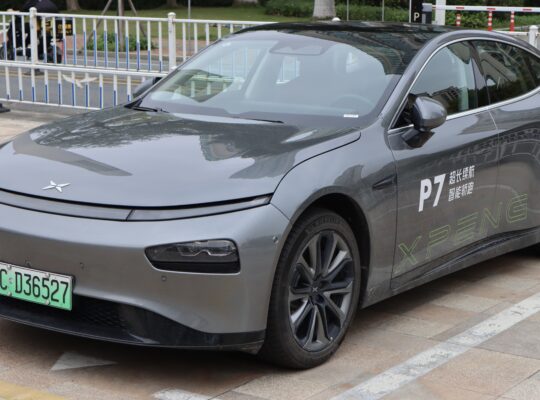

Data status: September 8, 2026. Tesla has crossed a line that investors have argued about for years. Cybercab is no longer only a rendering, a promise or a slide in a presentation. The company has begun commercial deployment of its purpose-built, driverless vehicle in Austin, and federal regulators have responded almost immediately with an audit of Tesla’s self-certification.
That makes the current Tesla stock Cybercab debate fundamentally different from the old one.
For years, the question was whether Tesla would ever deploy a true steering-wheel-free robotaxi. Now the more important question is economic: can Cybercab scale safely enough, cheaply enough and quickly enough to transform Tesla from a volatile automaker into a high-margin mobility platform?
The distinction matters because Tesla’s valuation has long reflected far more than Model 3 and Model Y deliveries. Investors are implicitly paying for autonomy, AI, energy, robotics and future service revenue. The Cybercab launch is therefore not just another vehicle event. It is a test of whether one of those optionalities is finally becoming an operating business.
The investment case changed the moment Cybercab entered commercial service
Tesla’s Q2 2026 filing already described Robotaxi as a major pillar of its strategy. The company said it had continued expanding and refining the Robotaxi service after its June 2025 launch and was preparing dedicated infrastructure for cleaning, maintenance, charging, security, teleoperations and fleet management.
Cybercab adds a new layer because it is a vehicle designed specifically for autonomous ride-hailing rather than a consumer car adapted to the service.
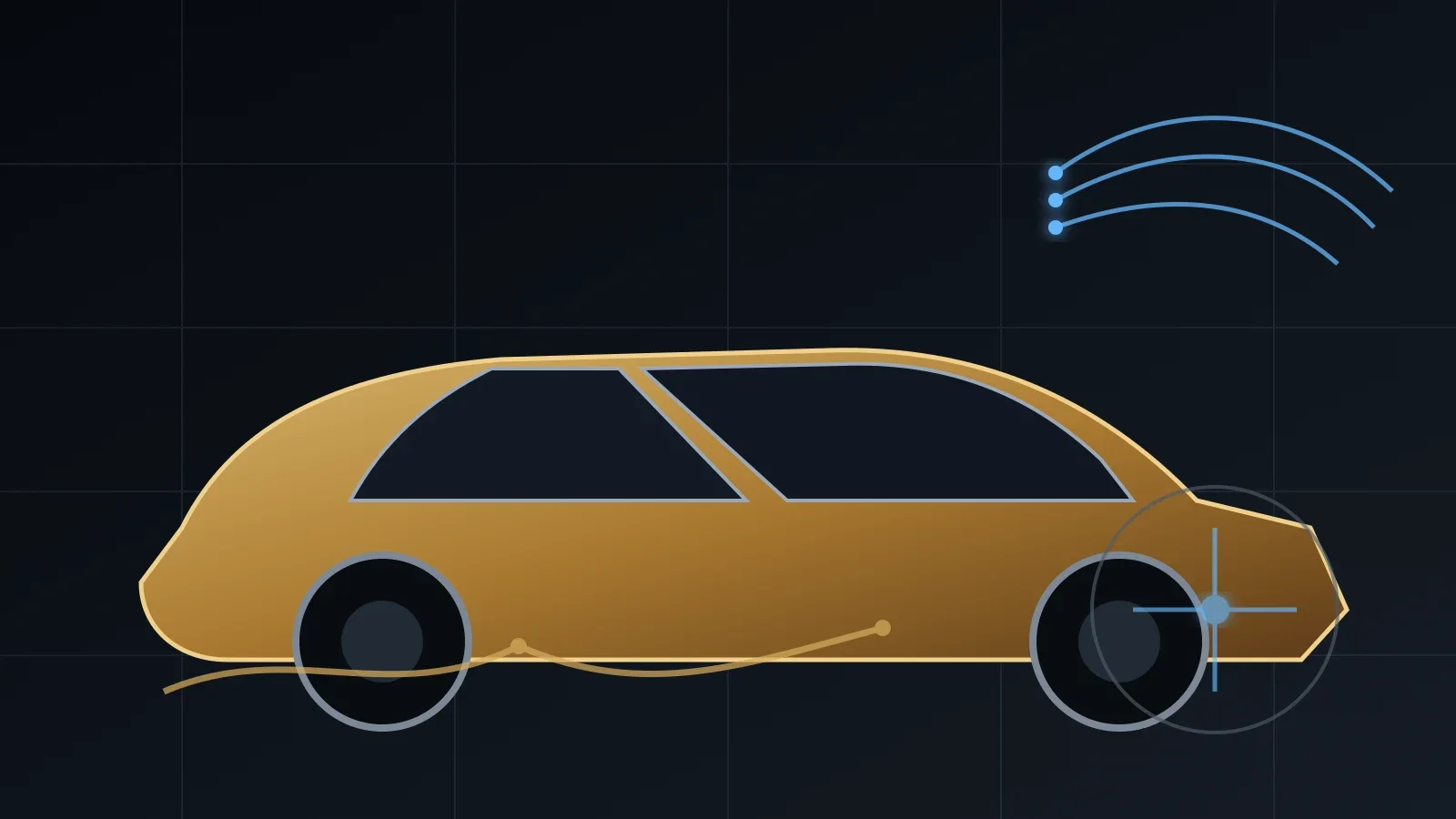
Tesla describes the two-seat Cybercab as a vehicle designed from the ground up for unmanned taxi use, without a steering wheel or pedals. That design is economically meaningful. A vehicle built only for fleet service can potentially optimize cost, durability, cleaning, energy efficiency and passenger turnover differently from a privately owned Model Y.
But removing traditional controls also makes regulation inseparable from economics.
NHTSA turned regulation into the first major post-launch catalyst
On September 4, the National Highway Traffic Safety Administration opened an Audit Query into Tesla’s certification that Cybercab complies with all applicable Federal Motor Vehicle Safety Standards.
The agency’s concern is straightforward: U.S. automakers self-certify compliance, but Cybercab lacks traditional human controls. NHTSA wants to examine the technical data and legal framework Tesla used to determine that the vehicle complies with standards written largely around vehicles containing steering wheels, pedals, mirrors and other conventional equipment.
This is not the same as a finding that Cybercab is unsafe or illegal. It is an investigation into the basis of Tesla’s certification.
For investors, however, the important point is that regulatory timing now becomes a direct component of valuation. A robotaxi network creates value only if vehicles can be deployed at scale. If certification disputes slow production, limit geography or require hardware changes, the revenue curve shifts to the right.
Q2 proved that Tesla’s core business is growing again
Robotaxi is not being built on top of a collapsing revenue base.
Tesla reported Q2 2026 revenue of $28.24 billion, up 26% year over year from $22.50 billion. Automotive revenue increased 23% to $20.52 billion. The company said cash vehicle deliveries were roughly 25% higher than a year earlier.
Through the first half of 2026, Tesla produced roughly 860,000 consumer vehicles and delivered approximately 838,000.
That growth matters because robotaxi spending is easier to finance when the existing automobile business remains productive.
But there is a catch. Q2 total automotive gross margin slipped to 16.9% from 17.2% a year earlier. The automotive business is growing, but it is not currently producing the kind of software-like margin that would by itself justify treating Tesla as a pure technology platform.
The valuation argument therefore rests on mix, not just volume
A traditional automaker creates value by selling more vehicles at acceptable margins. Tesla’s current thesis is broader.
The company is attempting to shift its economic mix toward software, autonomous mobility, energy storage and eventually robotics. If those businesses scale, each vehicle can become more than one sale. It can produce recurring service revenue, software revenue and utilization income.
That is why Cybercab matters disproportionately. A privately owned car is sold once. A robotaxi can theoretically generate paid miles for years.
The key word is theoretically.
High utilization creates maintenance, cleaning, insurance, charging and fleet-management costs. Autonomous systems require compute. Teleoperations can add labor. Accidents and downtime reduce available revenue hours. A vehicle that produces $50,000 of annual fares but consumes $45,000 in operating and capital costs is not a software platform. It is a low-margin transport asset.
The right metric is revenue per deployed Cybercab — not the size of the fleet
Investors will naturally celebrate fleet growth. I would be more interested in productivity.
Suppose one Cybercab produces 80,000 paid miles per year at an average realized fare of $0.75 per mile. That would create $60,000 of gross annual ride revenue before network fees, energy, maintenance, cleaning, insurance and depreciation.
If Tesla can manufacture the vehicle cheaply and keep utilization high, the return on capital could be extraordinary. If a Cybercab costs $30,000 and produces $15,000 of annual operating cash profit, the payback period is roughly two years.
If utilization is half as high or operational expenses absorb most revenue, the economics change completely.
This is why I want Tesla to eventually disclose paid miles, revenue per vehicle, network gross margin and fleet uptime. Without those numbers, investors will be forced to value a mobility business using anecdotes.
R&D spending shows how aggressively Tesla is funding the AI transition
Tesla spent $2.37 billion on research and development in Q2, up 49% year over year. For the first half of 2026, R&D reached $4.32 billion, up 44%.
The company explicitly linked the increase to AI and other programs.
This is one of the most important numbers in the filing because it shows the AI narrative has a real cost.
Investors often treat autonomy as an almost-free software layer sitting on top of cars Tesla already sells. In reality, Tesla is spending billions on compute, talent, chips, data infrastructure, robotics and manufacturing development.
That spending can create enormous value if it leads to high-margin autonomous revenue. Until then, it lowers near-term profits.
Capex has more than doubled
Capital expenditures reached $8.28 billion in the first half of 2026, compared with $3.89 billion in the same period of 2025.
Tesla is investing in AI infrastructure, semiconductor capabilities, Cybercab manufacturing, Optimus, batteries and other facilities simultaneously.
That is a crucial difference between the Tesla story and an asset-light software company. The transition into physical AI requires physical capital.
Tesla does have the balance sheet to support it. Cash, cash equivalents and short-term investments ended Q2 at about $43.52 billion. Operating cash flow for the first half reached $8.63 billion.
The risk is not near-term liquidity. The risk is return on invested capital.
Our DCF valuation guide explains why growth creates value only when the return on new capital exceeds the cost of that capital. Tesla is now spending at a scale where that principle matters more than ever.
Cybercab could improve Tesla’s vehicle economics in a way consumer EVs cannot
The consumer EV market is competitive. Price cuts, incentives and financing offers can win volume while hurting margin. A robotaxi network has a different economic structure.
If Tesla owns or controls the fleet relationship, it can capture both the vehicle margin and part of the service margin. It can optimize charging at off-peak hours. It can route vehicles toward demand. It can spread software development over more paid miles.
The same autonomous stack can theoretically improve with fleet data, creating a feedback loop:
more deployed cars → more driving data → better autonomy → higher utilization → more paid miles → more data.
That loop is the strongest version of the bull case.
The bear case is that regulation, edge cases and operating complexity prevent the loop from reaching sufficient scale.
The NHTSA audit is not just a legal footnote
A vehicle without a steering wheel or pedals creates a regulatory question that conventional Teslas do not.
Existing Federal Motor Vehicle Safety Standards include requirements designed around human-operated vehicles. NHTSA said its audit will examine whether Tesla concluded that some requirements do not apply to automated vehicles.
That question matters because a purpose-built robotaxi achieves some of its cost advantage by removing equipment intended for a human driver. If regulations force redesigns or exemptions, the economics can change.
The long-term policy direction is becoming more supportive of automated vehicles, but the current rules still apply. Tesla is therefore trying to scale a product while the regulatory framework is itself evolving.
Energy storage is the underappreciated hedge inside Tesla
While investors focus on Cybercab, Tesla’s energy business continues to grow.
Energy generation and storage revenue reached $3.14 billion in Q2, up 13%. Through the first half, Tesla deployed 22.3 GWh of energy storage products.
The quarter was not perfect. Energy gross margin fell to 20.4% from 30.3% a year earlier as deployment mix, pricing and warranty effects changed.
Still, energy gives Tesla a second physical platform that is not dependent on consumer vehicle demand.
That matters because the grid needs more storage as renewables, data centers and AI loads increase. The business can become more important to Tesla even if automotive growth normalizes.
Optimus remains the largest unpriced option — and the least proven
Tesla continues preparing for large-scale Optimus production. The potential market is enormous because labor is one of the largest cost pools in the global economy.
But I would not give Optimus the same valuation weight as Cybercab today.
Cybercab has reached commercial deployment. Optimus remains earlier in commercialization.
That distinction should matter in valuation. Optionality is valuable, but the discount rate applied to unproven future cash flows should be high.
Our essay on whether an AI bubble exists makes the same broader point: technological importance and investment value are not identical.
How I would value the Cybercab optionality
I would avoid assigning a giant total-addressable-market number and multiplying it by an arbitrary future market share.
A better framework starts with unit economics.
| Variable | Bear | Base | Bull |
|---|---|---|---|
| Annual paid miles per Cybercab | 30,000 | 60,000 | 90,000 |
| Realized revenue per mile | $0.60 | $0.75 | $0.90 |
| Annual gross ride revenue | $18,000 | $45,000 | $81,000 |
| Network cash margin | 5% | 25% | 40% |
These are scenario assumptions, not forecasts. Their purpose is to show the sensitivity.
In the bear case, a vehicle produces less than $1,000 of cash contribution annually. In the bull case, it could exceed $30,000. That difference explains why robotaxi valuation ranges can become absurdly wide.
The correct response to uncertainty is not false precision. It is scenario discipline.
What would make me more bullish
- Clear disclosure of fleet size and paid miles.
- Rapid geographic expansion without a rise in safety incidents.
- Evidence that Cybercab vehicle cost is materially below consumer EV cost.
- High fleet uptime and low maintenance expense.
- Regulatory progress that reduces deployment uncertainty.
- Robotaxi revenue beginning to appear as a distinct reporting line.
- Automotive gross margin stabilizing while AI investment remains elevated.
What would make me more cautious
- Regulatory delays that require major hardware redesigns.
- Slow deployment despite production capacity.
- High teleoperation or servicing labor per vehicle.
- Weak paid-mile utilization outside dense launch markets.
- Insurance or accident costs that erode ride economics.
- Continued capex growth without measurable autonomous revenue.
- Investor valuation expanding faster than the evidence.
Three Tesla scenarios after Cybercab
Bear case: autonomy works, but the business is operationally expensive
Cybercab operates successfully in selected markets, but regulation, maintenance, teleoperations and low utilization prevent attractive margins. Robotaxi becomes a real business without becoming a transformative one. Tesla remains primarily an automaker plus energy company, making a technology-platform valuation harder to defend.
Base case: gradual network economics emerge
Tesla expands city by city, regulatory issues are manageable, fleet utilization rises and recurring robotaxi revenue becomes material over several years. The business deserves a premium to automotive peers, but the market still needs to discount execution risk.
Bull case: Cybercab becomes a high-return mobility asset
Vehicle cost falls, utilization reaches very high levels, autonomous driving requires little human intervention and Tesla scales through both company-owned fleets and third-party owners. Each vehicle generates recurring service cash flow, and robotaxi becomes a major contributor to enterprise value.
Why interest rates still matter to Tesla stock
Even if the robotaxi thesis succeeds, the timing of cash flows matters.
A large part of Tesla’s perceived value comes from earnings expected years in the future. Higher bond yields reduce the present value of distant cash flows. That makes Tesla sensitive to the same duration effect as other high-growth technology stocks.
Our Fed September 2026 preview is therefore directly relevant. A stronger-for-longer rate path raises the hurdle Cybercab must clear to justify a premium valuation.
My view after the launch
I think the Cybercab launch is genuinely important because it moves the robotaxi thesis from narrative into measurement.
That is good for investors even if the next few months are messy.
Before commercial deployment, almost every debate about Tesla autonomy could be answered with a future promise. After deployment, investors can start demanding operating evidence.
How many vehicles are active? How many paid miles do they drive? What is the revenue per vehicle? What is the intervention rate? What does insurance cost? How much maintenance does a purpose-built autonomous vehicle require? What percentage of the fleet is actually earning money during peak hours?
Those questions will eventually replace arguments about demo videos.
That is the maturation of the thesis.
Tesla has finally made Cybercab real enough to be judged as a business. The next phase will be harder, because a real business has to produce real unit economics.
Tesla Cybercab FAQ
Has Tesla launched Cybercab commercially?
Yes. NHTSA’s September 4 announcement refers to Tesla’s commercial deployment of driverless Cybercab vehicles in Austin, Texas.
Why is NHTSA investigating Cybercab?
NHTSA opened an Audit Query to examine the basis for Tesla’s self-certification that Cybercab complies with applicable federal safety standards despite lacking traditional human controls such as a steering wheel and pedals.
How much revenue did Tesla generate in Q2 2026?
Tesla reported $28.24 billion of total Q2 revenue, up 26% year over year.
How much cash does Tesla have?
Tesla ended Q2 with approximately $43.52 billion in cash, cash equivalents and short-term investments.
What is the biggest Cybercab risk for Tesla stock?
The biggest risk is not simply whether autonomous driving works. It is whether Tesla can deploy vehicles at high utilization with regulatory clearance and operating costs low enough to generate attractive returns on the enormous capital being invested.
Sources
- Tesla — Q2 2026 Form 10-Q
- Tesla Investor Relations — Q2 2026 materials
- Tesla — Cybercab product/event description
- NHTSA — Cybercab self-certification Audit Query
- NHTSA — automated vehicle safety framework
This article is independent financial analysis for educational purposes and does not constitute investment advice.