

Research date: August 22, 2026. Educational content only; not investment advice. Options involve risk and are not suitable for every investor.
Implied volatility crush, usually shortened to IV crush, is the rapid decline in option-implied volatility after a known uncertainty is resolved. It is most visible after earnings: the company reports, the distribution of possible near-term outcomes narrows, and option premiums can fall even when the stock moves in the direction a trader predicted.
This is one of the most important lessons in options trading. Direction is only one input. The option price also reflects strike, time, interest rates, expected distributions and supply and demand. A trader who buys an expensive call before earnings is not simply betting that the stock will rise. The trader is betting that the option’s realized payoff will exceed a premium that already embeds an expected move.
What Is Implied Volatility Crush?
Implied volatility is the volatility input that makes an option-pricing model match the observed market price. It is not a direct forecast and not a guarantee. It summarizes how much uncertainty the option market prices, subject to model assumptions and trading demand.
Before a scheduled event, near-term options often become more expensive because the event can produce a jump. Immediately afterward, that binary uncertainty disappears. The remaining option has fewer possible event-driven outcomes, so implied volatility usually falls. The decline is the crush.
IV crush is most dramatic in the expiration that contains the event. Longer-dated options spread the event’s impact across more calendar time, so their implied volatility may fall less. This creates a term structure: one expiration can look unusually expensive relative to the next.
Why Options Can Lose After a Correct Directional Call
Suppose a stock trades at $100 before earnings. The market prices an approximate one-day move of $8, and a near-term $105 call costs $3. The stock rises to $104 after the report. The trader correctly predicted “up,” but the option remains out of the money. With the event gone, little time remaining and implied volatility lower, the call can lose most of its value.
The error was framing the trade as direction alone. The relevant question was whether the stock would rise far enough, soon enough, relative to the move embedded in premium. Options convert a directional opinion into a joint forecast about magnitude, time and volatility.
Even an in-the-money call can fall if its intrinsic gain is smaller than the decline in extrinsic value. The stock may rise $2 while the option loses $3 of event premium. The net result is negative.
Implied Move: What the Market Has Already Priced
Traders often estimate the expected move using the price of an at-the-money straddle—the call plus the put at the same strike and expiration. If the combined premium is $10, the market is roughly pricing a move on that order in either direction, although the exact probability interpretation depends on skew, rates and conventions.
A simplified volatility-based estimate is:
Expected move ≈ stock price × implied volatility × square root of time in years
This calculation is not a target. It is a scale for the distribution embedded in prices. A stock moving less than the straddle does not automatically make every seller profitable, and moving more does not automatically make every buyer profitable. Strike selection, entry price, exit time and hedging matter.
Vega, Theta, Delta and Gamma Around Earnings
Vega
Vega estimates how an option’s value changes for a one-percentage-point change in implied volatility, all else equal. Long options have positive vega; short options have negative vega. When IV falls, vega hurts long premium and benefits short premium.
Theta
Theta measures sensitivity to time. Near expiration, at-the-money decay accelerates. An event trade can therefore lose from both IV compression and the passage of a single night.
Delta
Delta captures the first-order effect of the stock move. A call benefits from an increase in the underlying according to its changing delta; a put benefits from a decline.
Gamma
Gamma measures the change in delta. Near-term at-the-money options have high gamma, so a sufficiently large move can overcome the volatility collapse. This is why event options are not simply “bad to buy.” The outcome depends on whether realized movement exceeds what premium priced.
IV Crush Is Not the Same as Time Decay
Both can reduce option value, but they are conceptually different. Theta describes loss associated with time passing under a model. IV crush describes a change in the volatility input inferred from market prices. Around earnings they occur together, making attribution difficult.
A trader who holds an option from the afternoon before earnings to the next morning experiences an overnight time step and a volatility repricing. The underlying also jumps, interest and dividends may matter slightly, and bid-ask spreads can change. A simple profit-and-loss number does not isolate the forces unless the position is decomposed.
Why Earnings Create a Volatility Term Structure
Imagine two expirations: one ends this Friday and one ends a month later. Both include the same earnings event, but the weekly option has little ordinary time around it. The event represents a large share of its total expected variance. For the monthly option, the event is one component among many trading days.
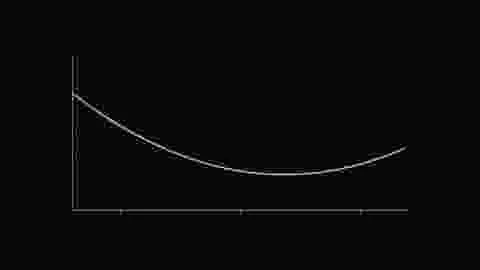
As earnings approaches, the near expiration’s annualized IV can appear extremely high because a concentrated one-day jump is expressed as an annualized number. After the report, that jump variance disappears and the line can collapse. Longer expirations may also fall, but usually less.
This explains why comparing raw IV across expirations without considering event timing is misleading. The market is not necessarily forecasting months of extraordinary movement; it may be pricing one extraordinary night.
Skew and the Volatility Surface
Options at different strikes do not share one implied volatility. The set of strike and maturity volatilities forms a surface. Equity puts often trade at higher IV than comparable calls because investors demand downside protection. Single-stock earnings can produce idiosyncratic call demand, put demand or asymmetric expected outcomes.
After the event, the entire surface can change shape. At-the-money IV may collapse while downside skew remains elevated. A trader who says “IV fell twenty points” should specify which strike and expiration. Surface changes determine how multi-leg positions behave.
Common Strategies Around IV Crush
Long Call or Put
The position needs directional movement large enough to offset paid volatility and decay. Risk is limited to premium, but a correct directional view can still lose.
Long Straddle or Strangle
The trader buys both directions and needs a sufficiently large move. The trade expresses a view that realized movement will exceed the market’s price, not a direction.
Short Straddle or Strangle
The trader sells event premium and benefits if the move is smaller than priced. Naked versions can have very large or unlimited losses and are inappropriate for many accounts.
Vertical Spread
Buying one option and selling another reduces net premium and vega but caps upside. The position can express direction with less exposure to IV crush.
Calendar Spread
Different expirations create a view on relative volatility and time decay. Earnings calendars are complex because the front and back expirations may reprice differently.
Strategy names do not eliminate the need to model maximum loss, assignment, liquidity and the full surface.
A Worked Earnings Example
Assume a stock is $100. A one-week $100 call costs $6 before earnings, with approximately $3 of exposure to a directional rise and $3 representing expensive event uncertainty in a simplified decomposition. After earnings, the stock opens at $103. The call’s intrinsic value is $3, but implied volatility drops and only $1 of extrinsic value remains. The option is worth about $4, producing a $2 loss despite a 3% stock gain.
If the stock opens at $112, intrinsic value is $12 and the call likely gains substantially despite IV crush. If the stock stays at $100, both directional and volatility components disappoint, and loss can be severe. The purpose of the example is not exact pricing; it is to show the hurdle created by premium.
How to Evaluate an Earnings Option Before Entry
- Estimate the implied move. Use the relevant straddle or a volatility calculation.
- Compare with history carefully. Prior earnings moves are a small sample and business conditions change.
- Inspect several expirations. Identify where event variance is concentrated.
- Inspect skew. Know whether the chosen strike is especially expensive.
- Model scenarios. Reprice the position across stock moves and lower post-event IV.
- Check liquidity. Wide spreads can dominate the theoretical edge.
- Define maximum acceptable loss. Size from the loss, not the premium’s apparent affordability.
Company fundamentals remain relevant because the event distribution depends on the business. Our deep dive on Keysight’s AI test demand and valuation illustrates how revenue drivers and expectations shape the earnings question that an option is pricing.
Historical Volatility Versus Implied Volatility
Historical or realized volatility measures what the underlying did over a past window. Implied volatility is backed out from current option prices and applies to a forward-looking distribution under model assumptions. Comparing them can be useful, but it is not a free arbitrage.
Realized volatility after earnings can be lower than pre-event IV while a long option still profits because the directional jump was favorable. Conversely, realized volatility over several days can look high while a badly chosen strike loses. Path, timing and hedging matter.
A disciplined volatility trader defines which realized measure is comparable with which implied horizon. Annualized numbers can obscure the fact that one scheduled jump drives most of the variance.
Common IV Crush Mistakes
Buying a call because earnings will be good. Good results can already be priced, and the stock may need to beat the implied move.
Looking only at IV rank. High relative IV may be justified by an imminent event.
Selling volatility because it usually falls. A rare large gap can overwhelm many small premium gains.
Ignoring strike skew. The selected option may be much more expensive than the headline at-the-money IV.
Using a market order in a wide spread. Execution can erase theoretical value immediately.
Holding spreads through expiration casually. Assignment and pin risk can create unintended positions.
IV Crush Beyond Earnings
The mechanism appears whenever a known uncertainty passes: regulatory decisions, court rulings, drug-trial data, product approvals, elections and macro releases. The size of the crush depends on how much variance the event contributed and whether uncertainty was truly resolved.
Sometimes IV remains high after the announcement because the result creates new uncertainty. A company may report earnings but withhold guidance. A court may issue a partial ruling. A central bank may surprise markets and increase future policy uncertainty. The calendar event ended, but the distribution did not narrow.
Macro valuation can also interact with event volatility. An earnings beat during a rate shock may not lift a long-duration stock. Our guide to rising yields and growth-stock valuation explains why the discount-rate channel can offset company-specific news.
My Bottom Line
IV crush is not a trick performed by market makers after earnings. It is the repricing of uncertainty once an event passes. Buyers pay for a distribution before the event; afterward, the option is worth its remaining exposure, not the drama that has already occurred.
The practical lesson is to replace “up or down?” with four questions: how far, by when, at what implied price and with what settlement risk? Compare the expected move with your thesis, model lower post-event volatility, prefer liquid contracts and size for a loss of the full premium when buying. A directional opinion becomes an options trade only after the volatility hurdle is understood.
Frequently Asked Questions
Can IV crush happen if a stock makes a big move?
Yes. IV can fall after uncertainty resolves even while delta and gamma produce a profitable option move. Profit depends on the balance of all effects.
How quickly does IV crush happen?
For overnight earnings, much of it can appear in the first quotes after the report. Further normalization may continue during the session.
Are longer-dated options protected from IV crush?
Not fully. They often fall less because the event represents a smaller share of total remaining variance, but their IV can still decline.
Does selling options before earnings guarantee profit?
No. A move larger than priced can create substantial losses, especially in naked short positions.