
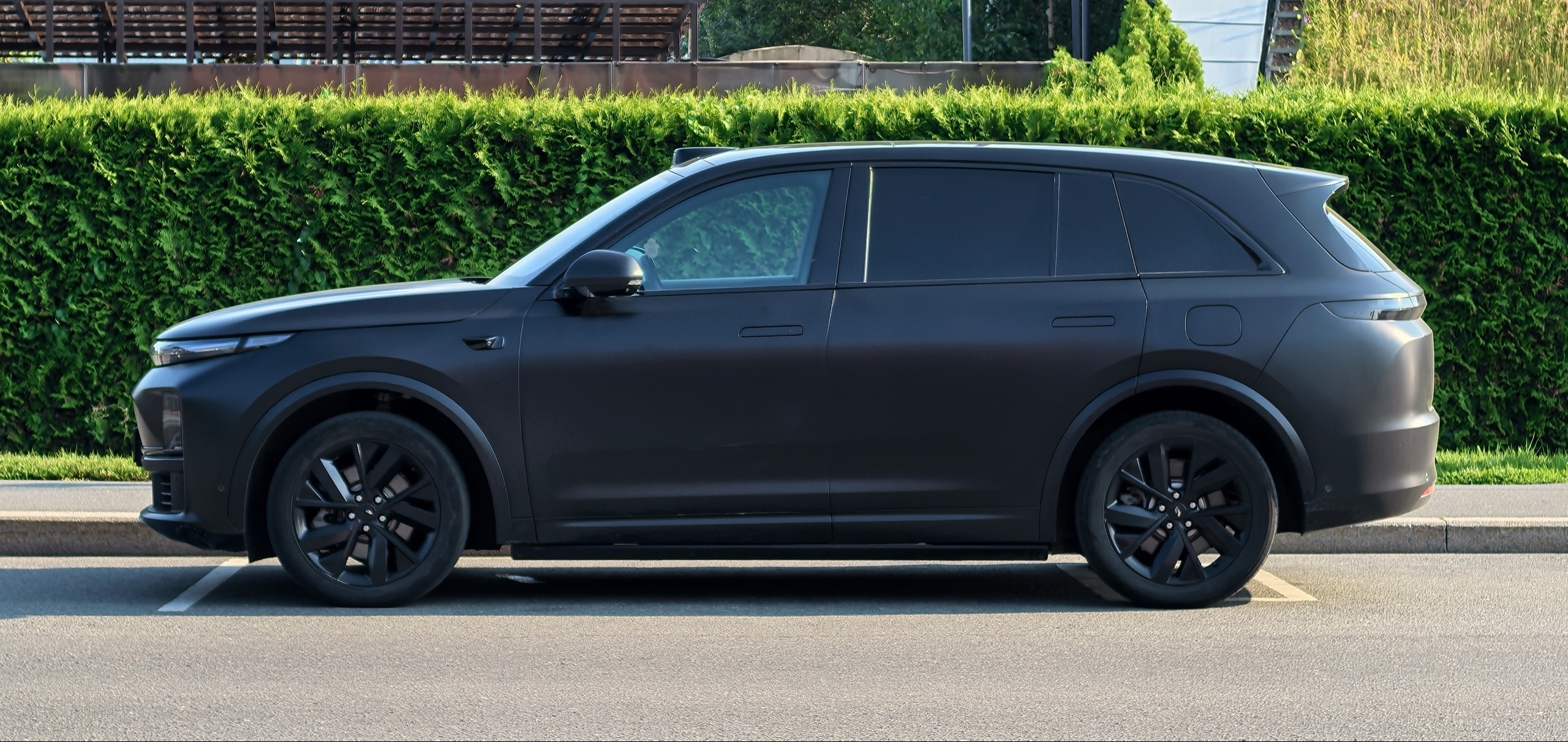
Data as of September 11, 2026. Li Auto has become one of the strangest valuation cases in China’s electric-vehicle market. The stock closed September 10 at roughly $11.65, giving the company a market capitalization near $11.4 billion. Yet Li Auto ended June with a reported cash position of RMB87.5 billion, or about $12.9 billion. On a simple headline basis, the company’s cash resources are now larger than its U.S.-listed equity value.
That sounds like a screaming bargain until you read the income statement. Second-quarter revenue fell 15.1% year over year to RMB25.7 billion. Deliveries declined 11.5% to 98,330 vehicles. Vehicle margin collapsed to 9.4% from 19.4% a year earlier. The company lost RMB1.7 billion in the quarter after earning RMB1.1 billion a year ago.
This is why Li Auto is not a simple net-cash trade. The market is asking whether the company that once looked like one of China’s most profitable EV manufacturers has lost its economic advantage, or whether 2026 is simply a painful transition year before a refreshed product cycle restores margins.
I think that distinction matters more than the current share price. If margins recover toward the mid-teens while the balance sheet remains intact, the stock looks unusually cheap. If 9% vehicle margins are the new normal, the cash pile can be consumed surprisingly quickly by factories, R&D, charging infrastructure and price competition.
Q2 was better than Q1 — but far worse than a year ago
Li Auto’s second quarter was a sequential recovery. Revenue increased 11.7% from Q1, deliveries rose from 95,142 to 98,330 vehicles, gross margin improved from 7.9% to 11.0%, and free cash flow improved dramatically from negative RMB7.4 billion in Q1 to negative RMB1.3 billion.
That is the bullish reading. The bearish reading is that almost every major profitability metric remains far below 2025 levels.
Vehicle margin was 19.4% in Q2 2025. One year later it was 9.4%. Gross profit fell 53.3% year over year to RMB2.8 billion. Operating income swung from a profit of RMB827 million to a loss of RMB2.3 billion.
A ten-percentage-point decline in vehicle margin is not cosmetic. It changes the entire valuation framework. At 20% vehicle margin, a premium EV company can fund software, R&D and expansion internally. At 9%, the same cost structure becomes much harder to support.
The margin collapse is the core of the investment case
Investors often focus on deliveries because they are reported monthly and easy to compare. But delivery growth without margin is not enough. China’s EV market is full of examples where higher unit volume was purchased through discounts, incentives and expensive product launches.
Li Auto’s historical advantage was that it combined strong volume with unusually healthy vehicle economics. Extended-range electric vehicles gave customers electric driving without the same range anxiety, while the company concentrated on high-priced family SUVs. That created attractive average selling prices and healthy gross profit.
2026 has disrupted that formula. Product transitions, lower average selling prices and competitive pressure have weakened profitability just as the company is expanding battery-electric vehicles and investing in more technology.
Source: Li Auto Q2 2026 results. Static chart for reliable rendering.
Why the balance sheet changes the downside
The most important counterweight to weak margins is liquidity. Li Auto reported a cash position of RMB87.5 billion, equivalent to roughly $12.9 billion, at the end of June.
StockAnalysis calculated Li Auto’s September 10 market capitalization at about $11.4 billion and enterprise value at roughly $1 billion. Enterprise-value calculations are imperfect for a company with large working-capital balances and financial investments, but the direction is clear: the market assigns relatively little value to the operating business once cash and debt are considered.
This matters because balance-sheet strength buys time. An EV company without cash has to protect liquidity first. It may cut R&D, delay factories or issue shares at depressed prices. Li Auto can continue investing while trying to repair the product cycle.
But cash is not free upside. It belongs to shareholders only if management deploys it intelligently. If years of price competition and factory investment consume the balance, today’s apparent discount can disappear.
Free cash flow is improving faster than earnings
Second-quarter free cash flow was negative RMB1.3 billion, compared with negative RMB7.4 billion in Q1 and negative RMB3.8 billion a year earlier.
That is one of the more encouraging data points in the report. Operating cash flow was approximately breakeven, at positive RMB15 million, versus billions of renminbi of cash burn in earlier periods.
The improvement suggests that some of the Q1 cash drain was tied to working-capital timing rather than a permanent operating structure. Still, negative free cash flow means the company is not yet financing its growth entirely from internal cash generation.
I would therefore treat cash preservation as a key quarterly KPI. The investment thesis gets stronger if margins recover without materially shrinking the cash pile.
The next product cycle has to work
Li Auto has spent 2026 refreshing the lineup. The company launched the all-new Li L8 in June, a refreshed Li L6 in July and a new Li MEGA in September. The Li i9 is scheduled to expand the battery-electric lineup further.
This matters because vehicle businesses are extremely sensitive to product freshness. A model can go from leading its category to looking outdated within a year when competitors are launching new cabins, chips, driver-assistance systems and charging architectures every few months.
Li Auto’s weak 2026 margins are partly the bill for crossing between product generations. If that explanation is correct, the refreshed lineup should improve both volume and mix in the second half.
Management itself expects further margin expansion as product mix improves. Investors should demand evidence rather than accept the narrative.
August deliveries provide an early signal
Li Auto delivered 37,679 vehicles in August, up from 30,468 in July. That is an encouraging sequential improvement and brings the company closer to the monthly level required to hit its Q3 guidance.
For the third quarter, Li Auto expects 95,000 to 100,000 deliveries, representing year-over-year growth of roughly 1.9% to 7.3%. Revenue is guided to RMB26.6 billion to RMB28.0 billion, ranging from a 2.8% decline to 2.3% growth.
This guidance is important because it suggests the worst of the volume decline may be ending. It does not imply a return to hypergrowth. The company is guiding for stabilization.
For a stock priced this cheaply relative to liquidity, stabilization may be enough to change sentiment — but only if margins recover with it.
Li Auto’s EREV advantage is becoming less unique
Li Auto helped popularize the extended-range electric vehicle model in China. The idea was elegant: customers get electric driving characteristics while a small gasoline engine acts as a generator, reducing charging anxiety on long trips.
This was particularly attractive for large family SUVs, where battery size and long-distance use matter.
The problem with successful ideas is that competitors copy them. EREV and plug-in hybrid offerings have expanded across the Chinese market. Li Auto now faces more direct competition from companies with aggressive pricing and broad portfolios.
That is why the company is also pushing into full battery-electric vehicles. It cannot rely on one powertrain architecture forever.
Battery electric vehicles create a second transition risk
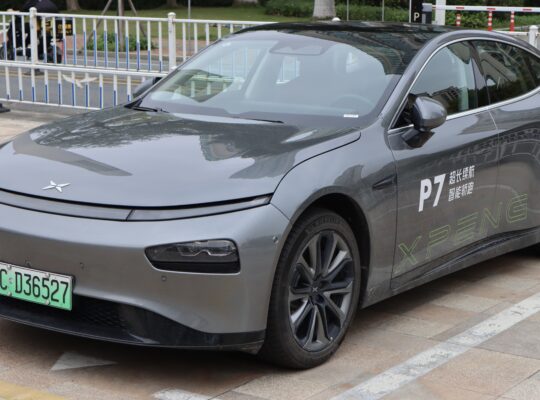
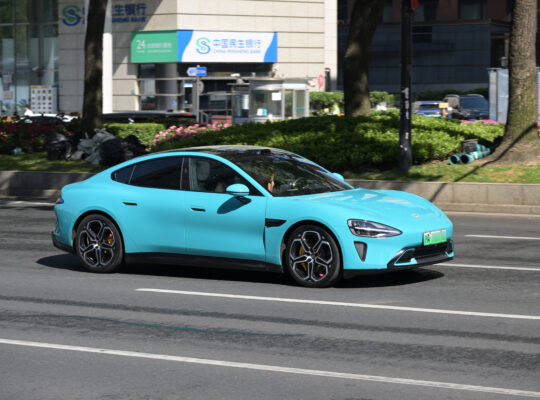
Moving deeper into BEVs expands Li Auto’s addressable market, but it also puts the company into more direct competition with Tesla, Xiaomi, XPeng, NIO and BYD.
Our XPeng analysis shows how difficult it is to produce attractive vehicle margins while simultaneously funding advanced-driving software and global expansion. XPeng’s total gross margin is improving, but vehicle economics remain competitive.
Our Xiaomi analysis highlights another problem: new entrants can bring ecosystems and huge consumer brands into the auto market.
Li Auto therefore needs more than a good EV. It needs a distinct reason for customers to choose its vehicles at a profitable price.
Family positioning is still a real brand asset
Li Auto has built a clear identity around premium family mobility. Large cabins, rear-seat comfort, screens, refrigerators, charging and family-oriented features may sound less glamorous than performance specs, but they map directly to how many Chinese households use vehicles.
That focus is a competitive advantage because automotive markets are not purely technological. They are emotional and demographic.
The question is whether that positioning can sustain premium pricing as competitors add similar features. Brand differentiation has to remain strong enough that Li Auto does not become trapped in price-based competition.
AI and intelligent driving add cost before they add value
Li Auto is also investing in autonomous-driving foundation models and proprietary chips. The company has highlighted MindVLA and its MACH computing architecture as part of its intelligent-driving strategy.
These investments can eventually support higher vehicle prices, subscriptions or stronger customer retention. But today they are primarily expenses.
This is a common problem across China’s EV sector. Every serious manufacturer is spending on assisted driving. If all competitors offer similar features, much of the investment becomes a cost of staying in the game rather than a source of excess profit.
Li Auto must turn technical investment into either pricing power or lower cost. Otherwise it will simply raise the industry’s fixed-cost base.
International expansion could diversify the story
The company is beginning to expand outside China, including launches in Central Asia and plans in the Middle East. International sales can provide additional volume and reduce dependence on China’s brutal price environment.
But international expansion is not automatically more profitable. New markets require distribution, service networks, regulatory approval, parts logistics and marketing.
For a company already experiencing margin pressure, overseas growth should be judged by contribution margin rather than headline units.
The valuation is difficult to ignore
At roughly $11.65 per ADR, Li Auto’s market capitalization is around $11.4 billion. That is down sharply from the company’s former valuation and close to the reported cash position.
The market appears to be assigning a large probability to structurally lower profitability.
That could be rational. A company burning billions while competing in autos should trade at a discount to cash because much of that cash may be required to fund operations.
But the discount becomes harder to justify if free cash flow approaches breakeven, deliveries stabilize and vehicle margin recovers.
Three scenarios for Li Auto stock
| Scenario | Vehicle margin | Deliveries | Interpretation |
|---|---|---|---|
| Bear | Stays below 10% | Flat or lower | Cash is gradually consumed and low valuation persists |
| Base | Recovers to 12–15% | Returns to modest growth | Losses narrow and enterprise value rerates |
| Bull | Returns toward high teens | New BEVs broaden growth | Operating business regains a premium valuation |
The base case does not require Li Auto to return to 2024-style enthusiasm. It requires the company to prove that 2026’s margin collapse is cyclical rather than permanent.
What would make me more bullish?
I would want vehicle margin above 12% first, then preferably moving toward 15%. I would also want monthly deliveries consistently above the mid-30,000 range without aggressive discounts.
Free cash flow should remain near breakeven or turn positive. The cash position is too important to the valuation to tolerate another prolonged period of heavy burn.
Finally, the new BEV lineup needs to gain traction without cannibalizing the profitable parts of the EREV business.
What would break the thesis?
The worst-case combination would be weak vehicle margin, stagnant deliveries and continued high investment. That would gradually convert Li Auto from a cash-rich company into a cash-consuming automaker.
A second risk is brand compression. If competitors replicate Li Auto’s family-oriented features and force pricing lower, the company may never recover its former margin structure.
A third risk is execution. Launching multiple refreshed models and new powertrains at once increases manufacturing and inventory complexity.
How Li Auto compares with BYD
Our BYD stock analysis illustrates the advantage of extreme scale and vertical integration. BYD can spread battery R&D, factories and software across millions of vehicles.
Li Auto does not need BYD’s volume, but it does need enough scale to support a premium technology stack. The company’s historic answer was high margin per vehicle. If that margin advantage disappears, scale becomes much more important.
My view on Li Auto stock
Li Auto is not broken in the sense that demand has disappeared or liquidity is threatened. The company still sells close to 100,000 vehicles per quarter, holds an extraordinary cash position and has begun to improve sequentially from a very weak first quarter.
But its old economic model has clearly been damaged. A drop from 19.4% to 9.4% vehicle margin changes the company from a profitable EV growth story into a turnaround.
At $11.65, I think the stock already reflects a significant amount of pessimism. The cash balance creates a genuine cushion and gives management time to execute. That is the attractive part.
The dangerous part is assuming the cash itself guarantees upside. It does not. Auto companies can consume cash quickly when product cycles, factories and price competition move against them.
I would therefore treat Li Auto as a margin-recovery investment. The key question is not whether deliveries grow 5% next quarter. It is whether each vehicle again produces enough gross profit to fund the technology, distribution and capital intensity around it.
If vehicle margin moves back into the mid-teens while free cash flow stabilizes, the current enterprise valuation could look unusually low. If margin remains in single digits, the market may be correctly warning that the former profit machine has changed permanently.
Sources
- Li Auto — Q2 2026 Financial Results
- Li Auto — August 2026 Delivery Update
- Li Auto Investor Relations — Recent Releases
- StockAnalysis — Li Auto valuation statistics
This article is independent analysis, not investment advice. Scenario analysis is illustrative and not a price target.