
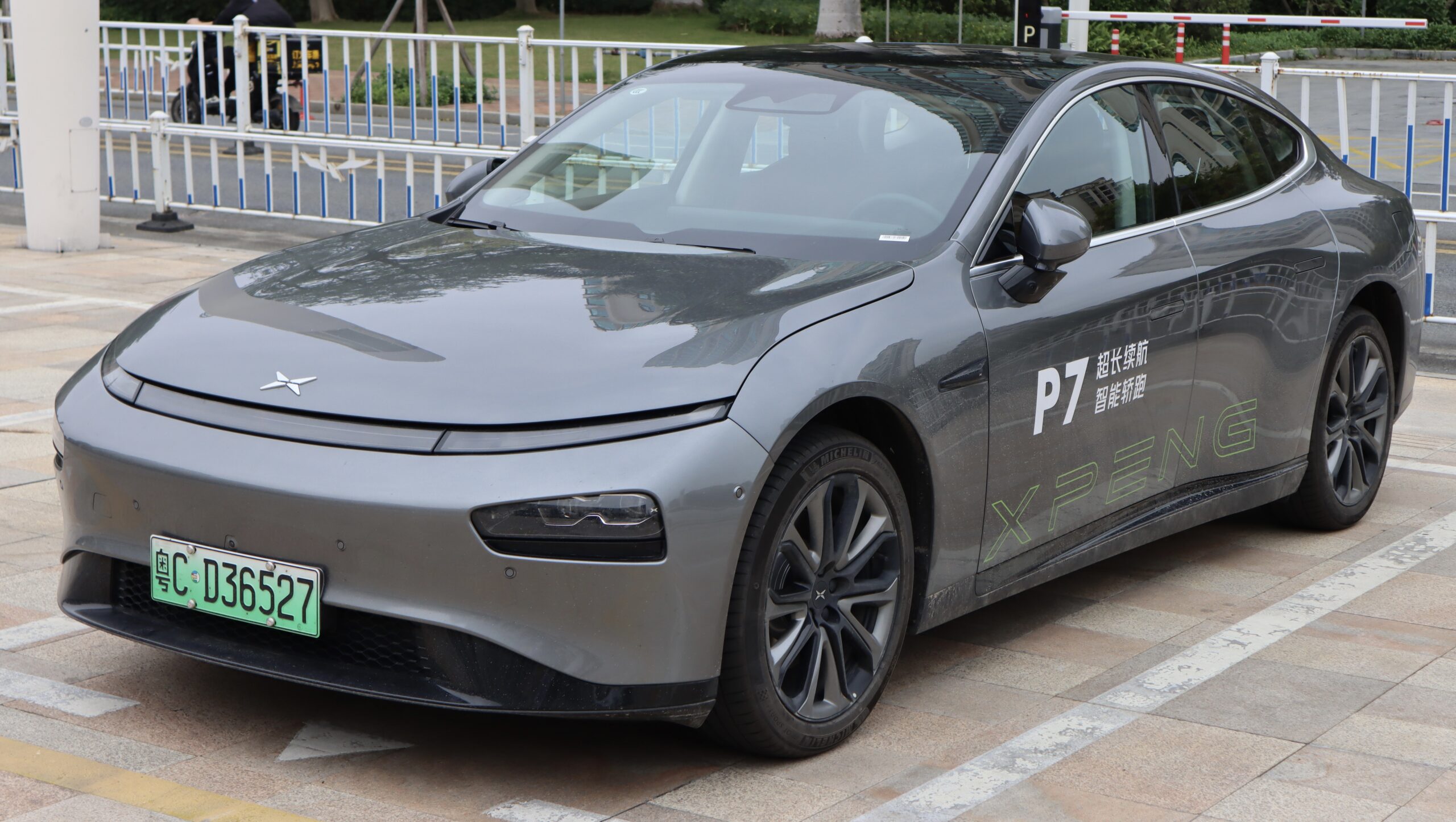
Data as of September 11, 2026. XPeng is one of the most frustrating stocks in China’s EV sector because the operating story is improving in places where the share price is deteriorating. XPEV closed September 10 near $10.34, down roughly 48% year to date. Yet in the second quarter, gross margin reached 20.7%, revenue rebounded 51.5% sequentially and the company ended June with RMB40.48 billion, or about $5.97 billion, of cash and liquid resources.
That is a strange combination. Investors usually reward improving margins and a stronger balance sheet. XPeng is instead being valued as if the next phase of the story will remain expensive, fiercely competitive and uncertain.
The market may be right. Vehicle margin was only 12.1% in Q2, below 14.3% a year earlier. Deliveries were essentially flat year over year. The company is still losing money, spending heavily on AI and new models, and operating in one of the most competitive auto markets in the world.
But there is another interpretation. XPeng may be transitioning from a pure EV manufacturer into something closer to a physical-AI platform: cars, driver assistance, robotaxis, robotics and software services. The question is whether those adjacent businesses create enough high-margin value to justify the capital burned by the automotive core.
Q2 looked much better than Q1
XPeng reported Q2 revenue of RMB19.74 billion, up 8.0% year over year and 51.5% quarter over quarter. Vehicle revenue was RMB17.05 billion, up 1.0% year over year but 55.0% sequentially.
The sequential rebound matters because the first quarter was weak. Deliveries rose from 62,682 units in Q1 to 103,295 in Q2. That brought XPeng back to essentially the same delivery level as Q2 2025, when it delivered 103,181 vehicles.
So the business is not in a clean volume-growth phase. It is in a recovery and product-transition phase.
For investors, that distinction is critical. A 51.5% quarter-over-quarter revenue jump sounds explosive. A 0.1% year-over-year delivery increase sounds stagnant. Both are true.
Gross margin at 20.7% is the strongest number in the report
XPeng’s overall gross margin reached 20.7% in Q2, up from 17.3% a year earlier and 20.6% in Q1.
For a Chinese EV company, that is an important milestone. It shows that XPeng is generating much better gross economics than the market may assume when looking only at the stock chart.
However, the composition matters. Vehicle margin was 12.1%, unchanged from Q1 but below 14.3% a year earlier. The improvement in total gross margin was helped by services and other revenue, where margin reached 75.1%.
That is exactly why XPeng should no longer be analyzed only as a car manufacturer.
Source: XPeng Q2 2026 results. Static chart for reliable rendering.
The services margin is not a footnote
Services and other gross margin reached 75.1% in Q2, up from 53.6% a year earlier and 66.5% in Q1. XPeng attributed the improvement partly to technical R&D services and sales of parts and accessories.
That figure changes the investment framework.
A company that sells only vehicles deserves to be valued primarily on manufacturing margin, scale, capital intensity and replacement cycles. A company that can layer high-margin technical services onto the installed base deserves a different multiple.
The challenge is scale. Services are still much smaller than vehicle revenue. A 75% margin on a small revenue stream does not magically turn a low-margin automaker into a software company.
But it does create a path.
The $5.97 billion cash position buys time
XPeng ended June with RMB40.48 billion, or about $5.97 billion, in cash, cash equivalents, restricted cash, short-term investments and time deposits.
By comparison, the company’s U.S.-listed equity market capitalization was around $10 billion in early September.
That means XPeng’s reported cash position is exceptionally large relative to its market value. Again, this is not the same as net cash or liquidation value. XPeng has liabilities, working-capital needs, factories and ongoing investment commitments.
But it matters because EV competition is a war of endurance. Companies with weak balance sheets eventually have to raise capital at bad prices. XPeng has more room to keep investing in product cycles and AI without immediately putting the equity story at risk.
The problem: XPeng still loses money
Net loss was RMB1.34 billion in Q2, compared with RMB0.48 billion a year earlier. Non-GAAP net loss was RMB1.24 billion.
The loss did improve from Q1, when the company lost RMB1.78 billion on a GAAP basis. But year-over-year deterioration remains a warning.
The company is therefore in an awkward phase. Gross margin looks healthier, but the operating cost structure remains heavy.
R&D expense reached RMB2.91 billion, up 32.1% year over year. That spending is funding new vehicles, AI systems, autonomous driving, robotics and other technologies.
The bull case calls this investment. The bear case calls it permanent complexity.
AI is becoming the company’s identity
XPeng increasingly describes itself not simply as an EV company but as a physical-AI company. That language would sound promotional if it were not backed by specific product programs.
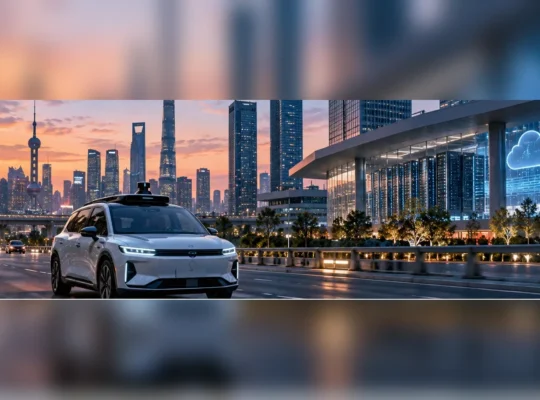
The company is developing VLA 2.0 for intelligent driving, advancing robotaxi validation and expanding a robotics business that recently attracted external capital.
The strategic idea is that the same core capabilities—vision, perception, motion planning, compute and large-scale data—can be applied across cars, autonomous taxis and humanoid or embodied robots.
That creates potential technical leverage. One AI stack can serve multiple products.
It also creates managerial risk. Building cars is already hard. Building cars, autonomous-driving software and robotics simultaneously is harder.
The robotics financing is the most interesting valuation clue
In connection with its Q2 update, XPeng said its robotics business raised more than $900 million in private financing at a post-money valuation above $6.3 billion.
That is extraordinary relative to XPeng’s roughly $10 billion public equity value.
Investors should not simply subtract $6.3 billion from XPeng’s market cap and conclude the automotive business is nearly free. We do not have enough information to treat the robotics unit’s valuation as fully attributable to public shareholders. Ownership, dilution, financing terms and future capital requirements matter.
But the round does provide something valuable: an external market reference.
Private investors were willing to finance XPeng’s robotics business at a multi-billion-dollar valuation. That suggests the non-automotive optionality is not purely a narrative invented by public-market bulls.
Robotaxi progress is moving from demo to regulation
In August, XPeng received a permit in Guangzhou allowing remote testing of intelligent connected vehicles without an onboard safety operator on designated roads.
That does not mean a large commercial robotaxi business arrives tomorrow. Regulatory permission to test is not the same as profitable deployment.
Still, each step removes one layer of uncertainty.
Robotaxi economics depend on safety performance, utilization, remote-operations cost, hardware depreciation and local regulation. If XPeng can eventually provide autonomous-driving technology or operate fleets at attractive economics, the addressable market extends far beyond personal vehicle sales.
This is why the company’s AI investment can matter even if car deliveries grow only moderately.
August deliveries show stabilization, not breakout
XPeng delivered 39,107 vehicles in August, up 4% year over year. July deliveries were 38,027, also up 4%.
Those figures are constructive but not spectacular.
They suggest the company has stabilized after a weak Q1, but they do not yet prove a new hypergrowth phase. The market is right to demand more evidence.
At this stage, I care more about the quality of deliveries than the absolute number. Are new models selling without heavy discounts? Is vehicle margin improving? Are overseas sales becoming more profitable? Those questions matter more than whether one month beats another by 2,000 units.
Global expansion is becoming financially meaningful
XPeng said overseas deliveries exceeded 20,000 vehicles in Q2 and overseas markets contributed 25% of first-half revenue.
That is a major development.
Chinese EV companies have spent years talking about international expansion. XPeng is reaching the point where the international business can materially change revenue composition.
The new L03 is scheduled for rollout across dozens of markets, while XPeng continues building sales and service presence in Europe, Australia and other regions.
International expansion offers two advantages. It diversifies XPeng away from the brutal Chinese price war, and it provides additional volume for a product architecture whose R&D costs are largely fixed.
The downside is obvious: tariffs, homologation, logistics, local servicing and brand acquisition make overseas growth expensive.
The Chinese EV price war still controls the downside
China’s EV market remains brutally competitive. BYD has scale, Xiaomi has ecosystem momentum, Li Auto competes aggressively in larger vehicles, and a long list of domestic manufacturers continue launching new models.
Our BYD stock analysis shows what manufacturing scale can do to competitive economics. BYD controls batteries, has enormous volume and can spread R&D across millions of vehicles.
XPeng cannot beat BYD by becoming a smaller version of BYD.
It needs differentiation in software, user experience, AI, charging and product design.
Xiaomi changes the competitive landscape
Our Xiaomi stock analysis highlights another threat. Xiaomi entered autos with a huge consumer-tech installed base and can connect the car to phones, homes and AI services.
XPeng therefore faces competition from both directions: traditional auto scale on one side and consumer-tech ecosystems on the other.
That makes XPeng’s own physical-AI strategy more understandable. The company needs a reason to exist beyond producing another competent Chinese EV.
Vehicle margin at 12.1% is the number I would watch most closely
Total gross margin can improve because high-margin services grow. That is valuable, but it can also disguise pressure in the core product.
Vehicle margin fell from 14.3% a year ago to 12.1% in Q2. Management attributed the decline partly to product-generation transition.
If that explanation is correct, margins should recover as the new product cycle matures.
If vehicle margin remains around 12% despite larger scale, investors need to ask whether competition has structurally reduced the profit pool.
I would want to see vehicle margin return toward the mid-teens before calling the automotive economics fully repaired.
The 20.7% gross margin is still a milestone
Despite that caution, XPeng deserves credit for total gross margin above 20%. Many EV companies spend years chasing that threshold.
It demonstrates that the combination of vehicle economics and high-margin services can work.
The next stage is converting gross profit into operating profit.
That means selling enough vehicles, services and software to cover nearly RMB3 billion of quarterly R&D plus selling and administrative costs.
At $10.34, investors are paying for uncertainty
XPeng closed September 10 near $10.34. The stock has lost nearly half its value in 2026.
A market cap around $10 billion looks low against a $5.97 billion cash position and a robotics business that recently received an external valuation above $6.3 billion.
But low does not automatically mean cheap.
The company still loses money. Vehicle margins are below last year. Competition is intense. Robotics may require years of additional capital before it becomes profitable. Robotaxis may remain a regulatory and technical project rather than a cash-generating business for some time.
The valuation only becomes compelling if at least one of those uncertainties resolves positively.
Three scenarios for XPeng stock
| Scenario | Vehicle economics | AI / services | Interpretation |
|---|---|---|---|
| Bear | Vehicle margin stays near 10–12% | R&D remains a cost center | Cash burn keeps valuation depressed |
| Base | Vehicle margin recovers toward mid-teens | Services remain high margin | Losses narrow and stock can rerate |
| Bull | International scale lifts utilization | Robotaxi and robotics gain commercial value | XPeng becomes more than an automaker |
The base case is more realistic than a robotaxi moonshot. XPeng does not need autonomous taxis to dominate China. It needs core auto economics to improve while optional businesses become less speculative.
What would make me more bullish?
First, I want vehicle margin above 14% again. Second, monthly deliveries should continue growing without aggressive price cuts. Third, international revenue should expand faster than its cost base. Fourth, the net loss should keep narrowing from the Q1 level.
I would also watch technical-service revenue closely. If services continue to carry margins above 60% while growing meaningfully, the quality of XPeng’s revenue mix improves.
Finally, I want the robotics financing to translate into operational milestones rather than just a valuation headline.
What would break the thesis?
The most dangerous outcome would be strong technology with weak economics.
XPeng could build excellent autonomous-driving systems, robots and vehicles while still failing to earn attractive returns if price competition captures most of the value.
A second risk is dilution. A capital-intensive company can destroy per-share value even while enterprise value grows if it repeatedly raises equity.
A third risk is geopolitical. Overseas expansion exposes XPeng to tariffs, regulatory restrictions and political scrutiny around Chinese connected vehicles.
Why the stock can stay cheap for longer than bulls expect
Public markets tend to discount optionality when the core business is unprofitable.
That is rational. Investors have seen many companies use AI, autonomy and robotics to justify valuations before those products produced cash.
XPeng’s robotics financing helps validate the asset, but public shareholders still need consolidated economics.
The stock may therefore remain cheap until operating losses approach breakeven, regardless of how impressive the technology roadmap becomes.
My view on XPeng stock
XPeng at roughly $10 is one of the more interesting asymmetric China-tech setups, but it is not a clean value stock.
The company has a large liquidity buffer, improving total gross margin, meaningful overseas expansion and real progress in AI-adjacent businesses. The private robotics financing is especially notable because it gives investors an external reference point for an asset that the public market may not be valuing explicitly.
At the same time, vehicle margin is still only 12.1%, deliveries are not yet growing fast year over year and the company continues to lose more than RMB1 billion per quarter.
I would therefore separate the story into two layers.
The first layer is the automotive repair. Can XPeng get vehicle margin back toward the mid-teens, maintain 35,000–45,000 monthly deliveries and reduce operating losses?
The second layer is optionality. Can services, robotaxis, AI and robotics become valuable enough that investors stop valuing XPeng as just another Chinese EV manufacturer?
If the first layer works, the stock looks inexpensive. If both layers work, the current market cap could eventually look dramatically too low.
If the first layer fails, the second will not save shareholders quickly enough.
That is why I view XPeng as a margin-recovery trade with AI optionality—not an AI stock that happens to sell cars.
Sources
- XPeng — Q2 2026 Results
- XPeng SEC filing — Q2 2026 financial results
- XPeng — August 2026 Deliveries
- XPeng — July 2026 Deliveries
- StockAnalysis — XPEV September 2026 price history
This article is independent analysis, not investment advice. Scenario analysis is illustrative and not a price target.